Structuring a Leather Dye Order: How MOQ, Lot Size and Price Build-Up Decide Your Real Cost
Two tanneries can buy the same shade at the same quoted price and still carry very different costs per square metre of finished leather. The difference is rarely the price per kilo. It is the structure around it: how much is committed per shade, how often it is called off, how many lots must shade-match each other, and what happens to the money between invoice and drum. Buyers who negotiate only the headline number leave the expensive parts undiscussed. This guide covers the rest — MOQ, lot sizing, price build-up, validity and payment terms.
Key Takeaways
- The price per kilo is one line in a build-up that also carries freight, duty, MOQ waste, carrying cost and shade-matching losses.
- MOQ applies per shade and per strength, not per order. Five tonnes over twelve shades is a small order twelve times.
- Lot size is a quality decision too: fewer, larger lots hold a shade better but cost more to get wrong.
- Validity and payment terms are priced into your offer whether or not they appear on it.
- Write the call-off schedule into the contract. Volume without a schedule gives away the flexibility you are paying for.
What Is Dye Order Structuring?
Order structuring is the set of commercial decisions between "we need this shade" and "the container is booked" — not the spec, not the audit, but the shape of the deal: how much you commit, in what increments, over what period, on what basis and on what cash terms.
Five variables interact: commitment (firm or indicative volume), granularity (split across shades and strengths), cadence (one shipment, call-offs or spot buying), price basis (what the figure includes and how long it holds) and cash terms (deposit, balance trigger, who carries the stock in between).
Most problems blamed on "the supplier" trace back to one of those five being left vague: a factory given indicative volume with no schedule cannot reserve capacity, and a buyer given a price with no basis cannot compare it to anyone else's.
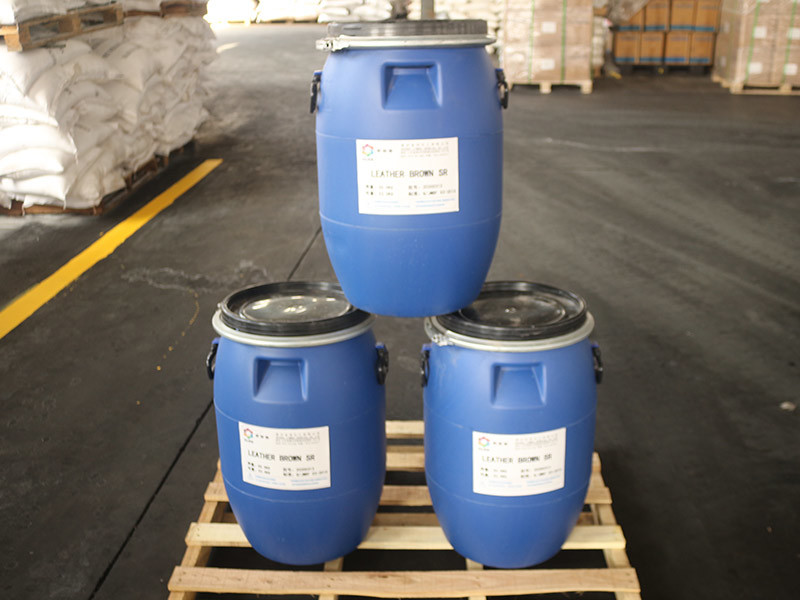
Packaging units set the smallest sensible increment of an order. Settle them before you discuss volume.
Technical Specifications: The Terms to Fix in Writing
None of these belong in a verbal quote. Each one changes the effective cost of the order.
| Term | What it controls | What to insist on |
|---|---|---|
| MOQ per shade / strength | Whether a shade is orderable and how much dead stock you create | A figure for each shade you run, not one order-level number |
| Lot (batch) size | Shade continuity between deliveries | Batch size in kg; whether partial batches carry a premium |
| Price basis | Which costs sit inside the number you compare | Ex-works, FOB, CIF or DAP, port or warehouse named |
| Price validity | Exposure to raw-material and freight movement | A window in days; re-quote on expiry, not auto-adjustment |
| Payment terms | Capital tied up before the goods are proven | Deposit %, balance trigger, any credit line |
| Lead time | Whether you run lean stock or carry safety cover | Days deposit to ready-date, split production / documentation |
| Strength tolerance | Whether a repeat lot runs at the same recipe | A percentage band against standard, plus the test method |
Strength tolerance deserves emphasis. A dye quoted at "standard strength" with no band cannot be compared: 100% on paper and 95% delivered are the same money only if you adjust the recipe — and adjusting means a re-lab, a shade confirmation and, on a dark shade, a real risk of mismatch across the run.
Comparison of Options: Three Ways to Buy the Same Volume
The right structure depends on how stable your production mix is, not on order size alone.
| Structure | How it works | Commercial effect | Quality effect | Best fit |
|---|---|---|---|---|
| Annual contract, scheduled call-offs | Volume and price fixed; deliveries released monthly | Best price leverage and reserved capacity; commitment is firm | Largest lots, fewest shade transitions across the year | Stable repeating shades — blacks, browns, core colours |
| Quarterly bulk lots | Bought per quarter, shipped in one or two consignments | Some price benefit, limited commitment, more admin | Moderate continuity; each new lot needs shade confirmation | Seasonal ranges, moderate forecast confidence |
| Spot / just-in-time | Ordered against current need, small and frequent | Highest cost per kilo, maximum flexibility | Many small lots — the hardest condition for shade continuity | Trials, low-volume fashion colours, emergency top-ups |
The mistake is running one structure across the whole range. A sensible programme runs all three — contract for volume shades, quarterly lots for seasonal colours, spot for trials.
How to Choose the Right Structure: 5 Steps
- Build a twelve-month shade map first. For each shade: annual volume, number of strengths, seasonality, stability. That tells you which shades can carry a contract and which must stay flexible. Skip it and you commit volume to a colour that dies in a season.
- Convert annual volume into lots. Divide each shade by the standard batch size. Two lots a year is comfortable; twelve on thin volume means constant shade confirmation and constant small-order pricing.
- Request offers on a stated basis. Same brief to every supplier: same shades, strengths, packaging, delivery point and validity. An offer without a basis gets sent back, not guessed at.
- Model total cost, including soft lines. Goods value, freight, duty, carrying cost, MOQ waste and re-lab time in one sheet. The cheapest quote per kilo often loses once those are counted.
- Fix cash terms and the release mechanism. Deposit, balance trigger and the releasing documents — a batch-numbered COA and draft bill of lading, not a calendar date.
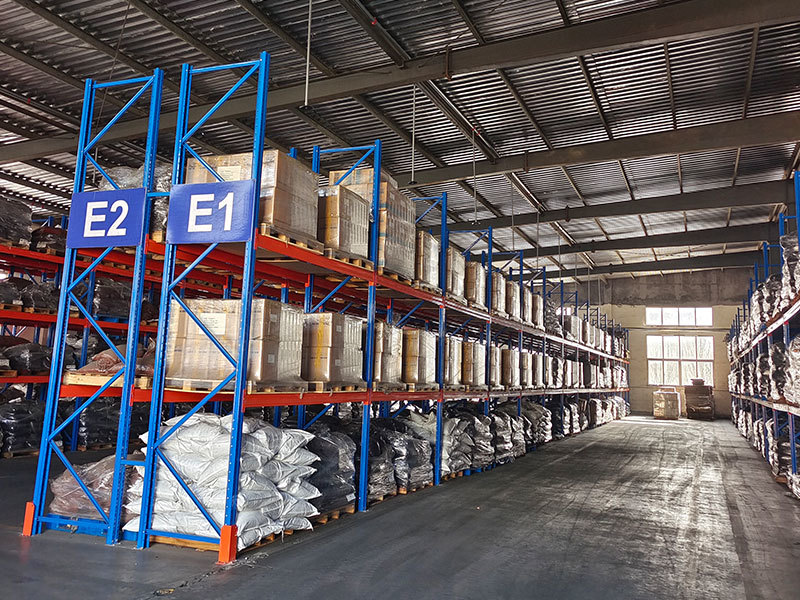
Lot segregation is what makes a call-off schedule workable. Without it, "we will ship from the same batch" is a promise nobody can keep.
Quality-Control Evidence: What Makes a Structure Enforceable
A well-structured order still fails if you cannot prove what arrived is what you bought. The evidence set is short, and it belongs in the negotiation, not in the first complaint.
- Batch-numbered COA per lot, carrying the drum-label number, measured strength against standard, and test methods. A COA without a batch number ties to nothing.
- Retention samples, sealed and dated — one per lot, held by both sides. When a shade dispute surfaces eight months later, this is the object that settles it.
- Lot continuity across call-offs. If the contract promises one run, the batch numbers should show it. A sudden jump is your early warning.
- Strength verification at goods-in — one dyeing against a retained standard tells you within a day whether the lot behaves as the COA claims.
- An agreed shade tolerance, measured the same way on both sides. Two methods produce two arguments.
What is missing is assurance. "Our quality is very stable" is not evidence; batch numbers, sealed samples and a stated tolerance are.
Packaging & Shipping: Where Structure Meets the Container
Packaging is the physical expression of order granularity. Standard export packing is a fibre drum or multi-wall bag with an inner liner, palletised and wrapped. Small units cost more per kilo but let you draw down stock finely; large units force you to use a whole unit at once.
Two consequences follow. Pallet configuration sets your freight break points: the step from LCL to a full container is a step in unit cost, so know where that line falls before fixing call-off size. And mixed-shade containers need a loading plan — with six shades aboard, the packing list must reconcile to drum labels line by line.
For modes, Incoterms and documents, see our guide to exporting dyes from China. A call-off that ignores transit time is a wish.
Common Buyer Mistakes
Buyer Checklist: Before You Commit Volume
Order-structure checklist
FAQ
Is a lower price per kilo always the cheaper order?
No. Once freight, duty, carrying cost, MOQ waste and shade-matching time are counted, a higher price on a larger, cleaner lot often wins. Comparison only means something when every offer sits on the same delivery basis.
Can MOQ be negotiated down for a trial order?
Often, if the shade is one the factory already produces and can pack from an existing batch. A custom shade at small volume is different — the batch gets made regardless. Ask whether the shade is standard or made-to-order: that answer explains the MOQ.
How long should a price be valid?
Long enough to cover your approval and PO cycle, short enough that the supplier is not carrying raw-material risk for free. Whatever the window, expiry should trigger a re-quote rather than an automatic adjustment.
Does a larger lot really reduce shade variation?
Within the lot, yes. One batch beats several smaller ones, so fewer lots a year means fewer shade confirmations and line transitions. The trade-off: a large lot made slightly off-standard is a large problem — which is why goods-in strength verification matters more on big lots, not less.
What should release the balance payment?
Documents you can verify: a batch-numbered COA matching drum labels, a packing list that reconciles, and a draft bill of lading with the right description and consignee. A calendar date releases nothing.
Send Us Your Shade List — We Will Structure the Order Around It
Tell us your annual volumes, shades and strengths. We will come back with MOQ per shade, batch sizes, a call-off proposal and a price on a stated basis.
Factory: +86 138 6922 6336 | WhatsApp: +44 7895 584241
Email: info@dyespro.com
Conclusion: Structure Is Where the Margin Hides
The price per kilo is the most visible number in a dye order and the least useful on its own. What decides your cost is whether volume clears MOQ without dead stock, whether lots hold a shade across a season, whether basis and validity let you compare offers honestly, and whether payment terms match the point at which you can verify the goods.
Get those right and a mid-priced supplier beats a cheap one on total cost. Get them wrong and a bargain turns expensive between goods-in and the finishing line. Rebuilding a dye programme? Shade map, then lot plan, then price — in that order the negotiation is about facts, in reverse about opinions.
Dezhou Jinmao Chemical Co., Ltd.
Manufacturer of GLIDE™ leather, textile, paper and wood dyes.
Dezhou, Shandong Province, China
Factory: +86 138 6922 6336
WhatsApp: +44 7895 584241
Email: info@dyespro.com
Web: www.dyespro.com · Leather dyes