Exporting Dyes from China: How to Choose Your Freight Mode, Incoterms & Document Set
You have agreed the shade, the strength and the price. Now the order has to survive 12,000 kilometres, two ports and a change of hands before it reaches your dyehouse — and that journey is where most dye orders actually go wrong. Buyers lose more value to a mis-declared cargo description, a CIF term they never negotiated properly, or a container that sweat-caked its top-layer drums than to a genuinely bad batch. This guide covers the transport half of the export process: how to pick a freight mode, which Incoterm keeps control where you want it, how the cargo should be loaded, and the document set that has to travel with it. It is written for leather, textile and paper manufacturers importing GLIDE™ dyes and similar anionic dye classes from China.
Key Takeaways
- Freight mode is a trade-off between cost, transit time and moisture exposure — not simply sea versus air. Match the mode to your stock cover and your destination port.
- The Incoterm, not the price, decides who owns the cargo when something goes wrong. Agree it in writing before booking and align it with who controls the forwarder.
- Sea containers sweat. Inner liners, a dry inspected box and correct stowage prevent almost all condensation damage to powder dyes.
- Your shipper's cargo description drives the bill of lading, the customs entry and any dangerous-goods handling. Get the HS classification and product description agreed before the booking is made.
- Documents are only useful if they arrive early. Demand the draft bill of lading, batch-numbered COA and packing list before the vessel sails — not after arrival.
What Is Dye Export Logistics?
Dye export logistics is everything between "goods ready at the factory" and "goods received and inspected at your warehouse." It has three moving parts that must be planned together.
The physical route: the mode of transport (sea FCL, sea LCL, air or rail), the port pair, the transit time and the number of handling steps the cargo will survive. A 25 kg kraft bag of acid dye survives a lot, but it does not enjoy being cross-docked three times in a humid climate.
The commercial term: the Incoterm, which fixes the exact point where risk and cost transfer from the seller to you. FOB, CIF, CFR and DAP move that line — and with it, your exposure to freight rates, demurrage and insurance.
The documentary trail: the commercial invoice, packing list, bill of lading, certificate of origin, insurance certificate and the technical dossier (SDS plus batch-numbered COA). These are the documents your customs broker files and your quality team audits against the drums on the floor.
Treat those three as one decision and logistics becomes predictable. Treat them separately — booking freight first, arguing about the Incoterm later, chasing documents after the ship has left — and the order drifts.
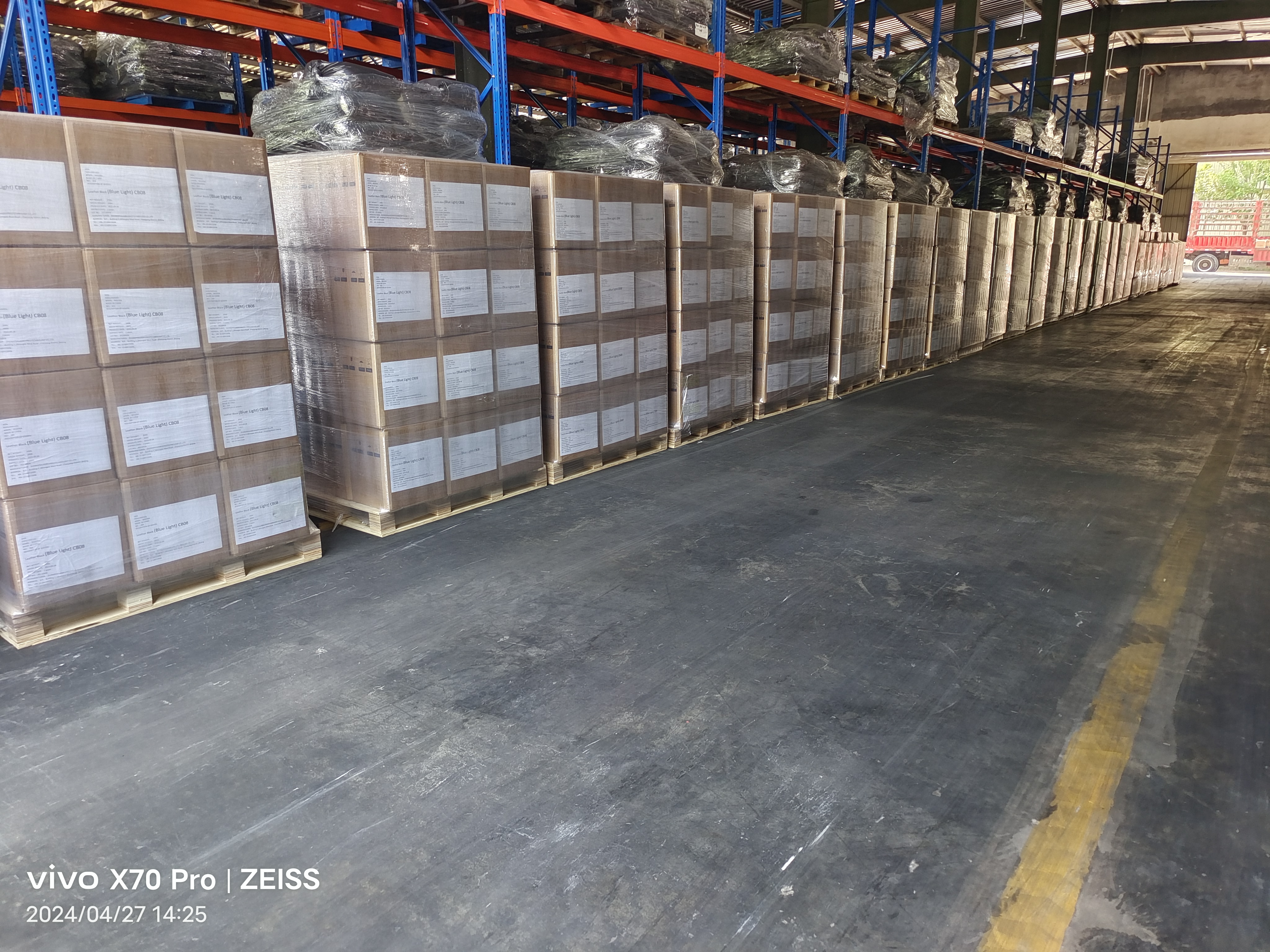
Export staging: every unit is labelled and palletised before it enters a container, so the packing list and the physical cargo can be reconciled line by line.
Technical Specifications: Matching Freight Mode to Your Order
There is no single right mode. The correct choice depends on order size, how much stock cover you hold, and how humid or long the route is.
| Mode | Typical order size | Transit profile | Best suited to | Key risks to plan for |
|---|---|---|---|---|
| Sea freight — FCL | Full 20 ft / 40 ft container | Slowest, lowest cost per kg | Regular repeat orders, bulk drum or bag loads | Container sweat, longer capital tied up in transit |
| Sea freight — LCL | Part-load, a few pallets up to ~10 CBM | Slower than FCL (consolidation + deconsolidation) | Trial orders, mixed dye-class orders, smaller importers | Extra handling, shared container humidity, more re-stacking |
| Air freight | Small, high-value or urgent quantities | Fastest, highest cost per kg | Line-down emergencies, urgent shade-matching samples | Cost, weight/volume limits, stricter screening |
| Rail (China–Europe) | Pallets to part-container | Between sea and air | Inland European destinations where rail terminals are convenient | Fewer departure points, route-specific scheduling |
Comparison of Options: Incoterms in Plain Language
Incoterms are the vocabulary of risk transfer. Most dye importers live in four of them.
| Incoterm | Seller delivers | Buyer takes over | Who books the main freight | When it suits a dye buyer |
|---|---|---|---|---|
| FOB (Free On Board) | Loaded on board at the Chinese port | From the ship's rail onward — freight, insurance, destination | Buyer | Buyers who have their own forwarder and want control of cost and routing |
| CFR (Cost and Freight) | Freight paid to destination port | Risk from loading onward; buyer insures | Seller | Buyers who want the seller to arrange carriage but will manage their own insurance |
| CIF (Cost, Insurance, Freight) | Freight and minimum insurance to destination port | From loading onward (risk), though seller insures | Seller | First-time importers who want one figure and simpler admin |
| DAP (Delivered at Place) | Goods delivered to your named address, ready for unloading | At your site, after import clearance | Seller | Buyers who want a landed door price and to offload customs coordination for import duty/taxes |
The subtlety that catches people out: under CIF the seller arranges insurance, but the risk transfers to you at the port of loading. So the cargo can be damaged mid-ocean while it is technically your loss, and you are reliant on the policy the seller chose. If you want to control how much cover sits behind your goods, FOB or CFR plus your own policy gives you that control directly.

From one factory to many markets: the port pair and Incoterm you choose shape both the freight cost and the risk line on every shipment.
How to Choose the Right Option
- Size the order against your stock cover. If you hold six weeks of dye and the sea transit is four, FCL sea freight is the obvious answer. If you hold two weeks and the route is long, you are either paying for air on emergencies or you need to adjust your buying rhythm — not the freight mode.
- Pick the port pair, not just the country. A slower but better-connected destination port can beat a "closer" one that adds a truck leg and a re-handling. Ask your forwarder for the door-to-door time, not just the port-to-port time.
- Decide who controls the freight. If you have a forwarder you trust and volume to negotiate, take FOB and book it yourself. If you are new to importing, CIF or DAP removes a layer of admin while you learn the route.
- Fix the cargo description and HS classification in writing. Agree the product description for the bill of lading and the HS subheading before the booking is made. A vague or contradicted description is the fastest way to a customs hold.
- Set the document deadline. Write into the contract that the draft bill of lading, packing list, batch-numbered COA and pre-shipment sample are sent before the vessel sails. Documents that arrive after the goods are documents you cannot act on in time.
Quality-Control Evidence Before You Ship
Logistics is not an excuse to skip verification. Before a container is sealed, a reputable Chinese dye manufacturer should be able to provide, per batch:
- A batch-numbered Certificate of Analysis covering strength, shade, moisture and the fastness parameters agreed on your spec sheet — with the same batch number that appears on the drums.
- A current Safety Data Sheet for each product, which is also the document your forwarder uses to confirm the dangerous-goods status of the cargo.
- A retention sample of the shipped lot held by the factory, plus a pre-shipment sample for your own lab dip so you can confirm shade before the goods land.
- Loading photos of the sealed container and the pallet markings, which let you reconcile the packing list against what actually shipped.
- Any compliance certificate relevant to your market — for leather buyers working to brand requirements, ZDHC conformance for the product line.
None of these are substitutes for independent testing at your end, but they are the evidence that lets you accept a shipment without a fight. Ask for the retention sample and the batch COA as a condition of the order, not a favour after it.
Packaging & Shipping: The Loading Detail That Decides Arrival Condition
The same powder dye arrives pristine or ruined depending on how it was packed and placed. The controls that matter most over a long sea leg:
- Inner liners on every unit. A PE inner liner inside each drum or bag is the single most effective barrier against a container's day-night humidity cycling.
- A dry, inspected container. Check the box for holes, prior wet cargo and odour before loading. Reject and swap it; it is far cheaper than a moisture claim.
- Pallets, strapping and dunnage. Keep the load off the container floor, strap it against shifting and leave the door area clear for easy inspection at destination.
- Desiccant where the route warrants it. On long, humid corridors, container desiccant bags absorb the moisture that would otherwise condense on the cargo.
- Clear per-unit marking. Batch number, article code, net weight and PO number on every unit — so the packing list can be verified drum by drum at receiving.
ISPM 15 heat-treated pallets are standard for most destinations; confirm the requirement for your country, especially if you are importing into markets with strict phytosanitary rules.
Common Buyer Mistakes
Buyer Checklist: Pre-Shipment
Tick these before the container doors close
FAQ: Exporting Dyes from China
Should I import dye FCL or LCL?
FCL wins on cost per kilogram and on arrival condition once your order fills a container, because the box is loaded once and sealed once. LCL makes sense for trial orders, mixed dye-class orders and smaller importers who cannot yet fill a container — accept the extra handling and plan your moisture controls accordingly.
Which Incoterm is best for a first dye order?
Many first-time importers start with CIF or DAP to keep the admin simple and get a single landed figure, then move to FOB once they have their own forwarder and want direct control of freight cost and routing. Whichever you pick, define the packaging spec and document list separately.
Are dyes dangerous goods?
It depends on the product. Many dye powders ship as ordinary general cargo, but some preparations fall under environmentally hazardous substance entries and liquid products may carry their own classification. The determination must come from the SDS for the specific item and be confirmed by your forwarder before booking.
How do I stop dye powder from caking in a sea container?
Inner liners on every unit, a dry inspected container, container desiccant on humid routes, and stowage that leaves the doors clear. Inspect and photograph immediately on unloading — insurance claims depend on prompt, documented notice.
What documents must travel with a dye shipment?
Commercial invoice, packing list, bill of lading, certificate of origin or FTA form, insurance certificate where applicable, and the technical dossier: SDS plus a batch-numbered COA for each lot shipped. For leather buyers working to brand requirements, any compliance certificate such as ZDHC conformance for the product line.
Can I consolidate several dye classes in one container?
Yes, and it is common when buying acid, direct and leather dyes from one manufacturer. The requirement is unambiguous segregation: correctly labelled units, intact liners, and a packing list that identifies each article and batch separately so customs and your receiving team can verify line by line.
Who pays import duty and taxes?
Under most FOB and CIF arrangements the buyer handles import clearance and pays duty and taxes at destination. Under DAP the seller delivers to your address but the buyer still normally handles import clearance and duty. Confirm the exact split with your supplier and broker before you book, not after the goods arrive.
Get a Landing Plan, Not Just a Price
Tell us your product, order size and destination — we will come back with the recommended freight mode, Incoterm options, packaging spec and the full document set for your order, before you commit.
Factory: +86 138 6922 6336 | WhatsApp: +44 7895 584241
Email: info@dyespro.com
Conclusion
Freight mode, Incoterm and documents are not admin overhead — they are the part of the order that decides whether the dye you specified is the dye your dyehouse actually receives. Size the mode to your stock cover, put the risk line where you want it with the right Incoterm, control moisture at loading, and hold the batch COA and samples before the vessel sails. Dezhou Jinmao Chemical ships GLIDE™ dyes to leather, textile, paper, fur and wood manufacturers worldwide, and it is happy to plan the logistics hand-in-hand with the chemistry.
Dezhou Jinmao Chemical Co., Ltd.
Manufacturer of GLIDE™ leather dyes, acid dyes, direct dyes, textile, paper, fur and wood dyes.
Factory: +86 138 6922 6336 | WhatsApp: +44 7895 584241 | Email: info@dyespro.com
www.dyespro.com