Dye Export Documentation & Packaging: What to Specify Before Your Container Leaves China
Most dye buyers spend their negotiation energy on shade, strength and price — then lose a week at destination because a pallet had no batch label, a COA referenced a different lot, or the drums went into a container without inner liners and arrived caked solid. The dye was fine. The shipment failed. Documentation and packaging are not paperwork chores; they are the part of the order your customs broker, your warehouse and your dyehouse all judge you on. This guide is the pre-shipment half of the export process: exactly what to write into the sales contract about packaging, marking, classification and documents, and what to hold in your hand before the container doors close.
Key Takeaways
- Specify packaging twice: once for the dye's physical form (powder, granule, liquid) and again for the route's humidity and handling.
- Every drum and bag should carry the batch number, article code, net weight and PO number — not just a carton label on the pallet.
- Get the HS subheading and any dangerous-goods classification agreed in writing before booking; leaving it to the forwarder at the port is how shipments get held.
- Ask for a batch-numbered COA, a retention sample from the shipped lot, and a pre-shipment sample for your own lab dip — before dispatch, not after.
- Moisture, not breakage, is the leading cause of dye cargo damage. Inner PE liners, desiccant and correct stowage cost very little and prevent almost all of it.
What Actually Constitutes a Dye Shipment?
An export dye order is two parallel deliverables that must agree with each other down to the kilogram and the lot number.
The physical package: the primary container (kraft bag, fiber drum, jumbo bag or IBC), its inner liner, the pallet and the marking. This is what protects the chemistry and what your receiving team will scan, stack and quarantine.
The document set: commercial invoice, packing list, bill of lading, certificate of origin or FTA form, insurance certificate, and the technical dossier — Safety Data Sheet (SDS), Certificate of Analysis (COA) per batch, and any compliance certificate such as ZDHC conformance for the product line. The invoice says 1,000 kg; the packing list says 40 drums; the COA should describe one batch and the drums should be labelled with that same batch.
When those two deliverables drift apart, the delay is never at the factory — it happens at your port, in front of a customs officer or a receiving clerk who cannot reconcile the paperwork with the pallet in front of them.
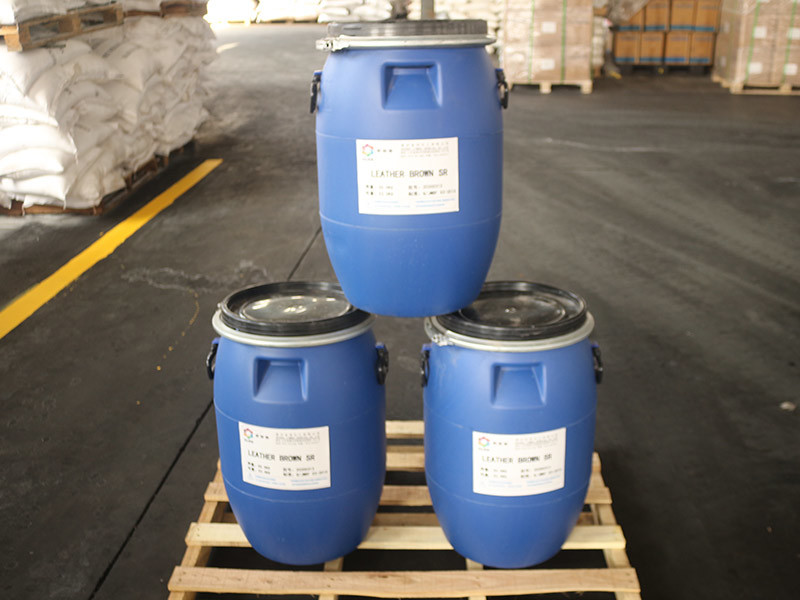
Export packing at the factory: drums are palletised, strapped and labelled before they ever reach the container.
Technical Specifications: Standard Export Packaging for Dye Powders
| Packaging format | Net weight | Inner liner | Best suited to | Handling notes |
|---|---|---|---|---|
| Multi-ply kraft paper bag | 25 kg | PE inner liner | Acid, direct and paper dyes in powder form; full-pallet orders | Palletised and stretch-wrapped; not suitable for hand-stacked LCL |
| Fiber drum with lid | 25 kg | PE bag inside drum | Export default where humidity or rough handling is expected | Reclosable — good for partial consumption in the dyehouse |
| Fiber drum, large | 40–50 kg | PE bag inside drum | High-volume single-shade orders | Fewer units to handle; check manual lifting limits at your site |
| FIBC / jumbo bag | 500–1,000 kg | PE liner, discharge spout | Large converters with bulk feed systems | Requires forklift and dry, covered storage at destination |
| IBC / plastic drum (liquids) | Per specification | Sealed, gasketed closure | Liquid dye and finishing auxiliaries | Heavier; confirm dangerous-goods status and stacking limits |
Two parameters matter more than the format itself. The first is the inner liner: a PE bag inside a drum or bag is what stands between your dye and ambient humidity during a 30–40 day sea voyage. The second is palletisation: an ISPM 15 heat-treated pallet, strapped and stretch-wrapped, with four-way forklift entry, is the difference between a clean unload and a 20-minute pallet rebuild at your dock.
Comparison of Packaging Options by Route
| Option | Route fit | Advantages | Watch-outs |
|---|---|---|---|
| 25 kg bag on pallet, FCL | Sea freight, full container | Lowest packaging cost per kg; dense, stable stowage | Needs liner and dry container; poor choice for humid/tropical legs without protection |
| 25 kg fiber drum, FCL | Sea freight, full container | Best moisture and crush resistance; reclosable | Higher packaging cost and more volume per tonne |
| Bag or drum on pallet, LCL | Shared container | Lower minimum volume for trial orders | Extra handling, longer transit, more condensation exposure; insist on drums |
| FIBC jumbo bag | High-volume repeat buyers | Fastest unloading into bulk systems | Only where the receiving facility is fully dry and equipped |
| Air freight or courier, small packs | Samples and urgent top-up | Days, not weeks | Cost per kg is high; declare the goods correctly and keep the SDS with the airway bill |
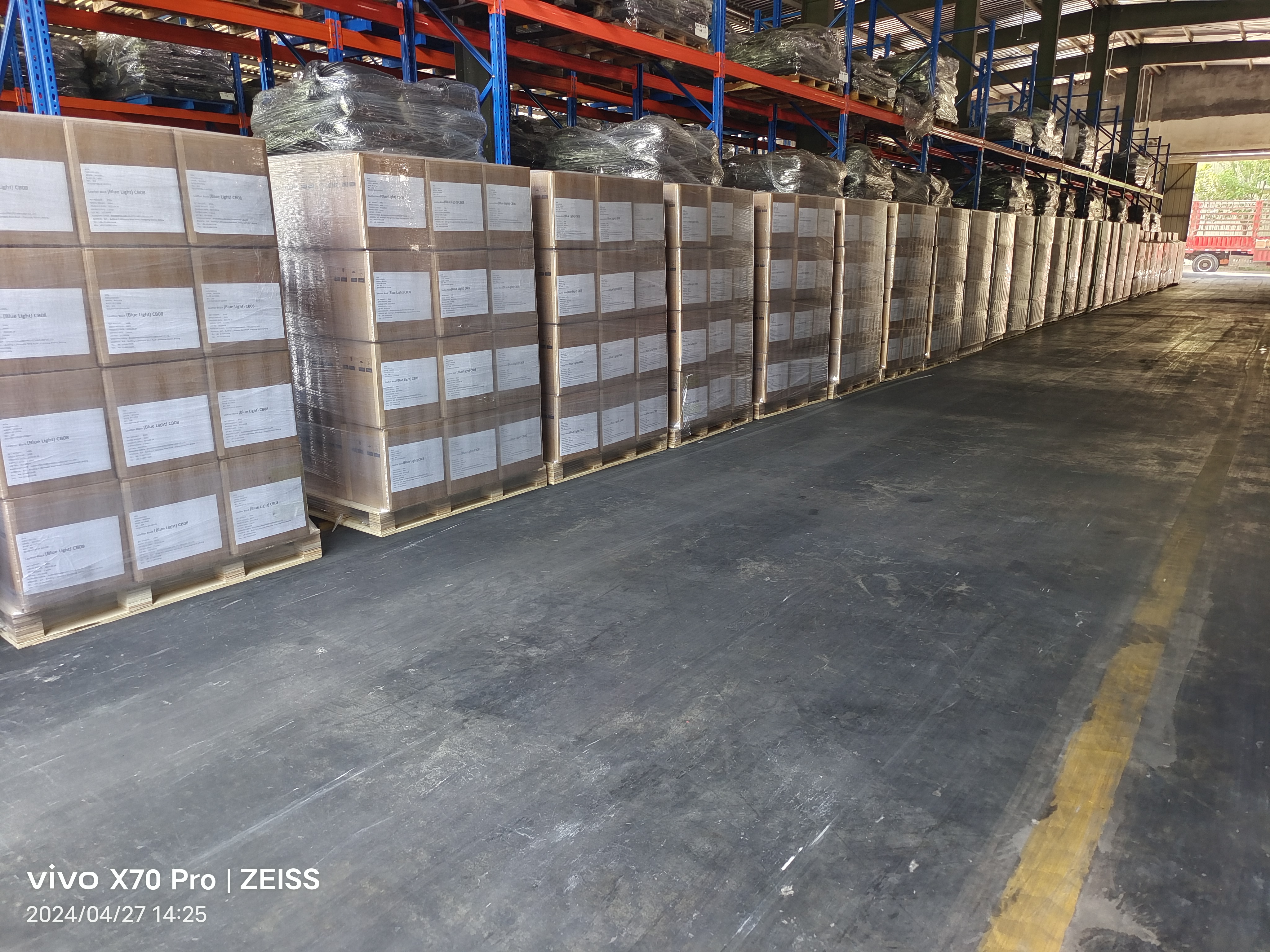
Labelling and staging before dispatch: packing list figures should be verifiable against the physical units.
How to Choose the Right Packaging and Document Set: 5 Steps
- Confirm the physical form and its sensitivity. Establish whether the product is powder, granule or liquid, how hygroscopic it is, and whether it cakes under pressure. That single answer rules out half the packaging options before price enters the conversation.
- Match the package to the route, not to the price list. A tropical transhipment route, an LCL consolidation, or a long inland rail leg after discharge all raise moisture and handling risk. Where those exist, specify drums with PE liners and ask about desiccant.
- Fix the marking standard in writing. Every unit should show article code, batch number, net weight, production date and PO number, printed in English and legible after handling. Pallet-level labels alone make it impossible to quarantine a suspected lot at your warehouse.
- Agree classification before booking. Have your customs broker confirm the HS subheading and whether the specific product SDS triggers a dangerous-goods entry. Getting this in writing, from both your broker and the supplier, avoids the worst-case scenario: a container sitting at port while the classification is argued.
- List the documents as a delivery condition. COA per batch, SDS, pre-shipment sample, retention sample, certificate of origin, insurance certificate and packing photos. Write these into the contract with a defined deadline — for example, documents in your inbox 48 hours before vessel departure.
Quality-Control Evidence to Collect Before the Container Sails
Nothing in this section requires you to trust a marketing claim. Each item is a document or a physical sample that can be checked against a standard.
- Batch-numbered COA. Should state the batch/lot number, the test parameters (strength or shade, moisture, insolubles as applicable), the standard used, and the date. A COA without a batch number is not traceable to anything.
- Retention sample from the shipped lot. Retained at the factory and available for reference if a dispute arises. Ask that it be drawn from the exact lot on the bill of lading.
- Pre-shipment sample for your own lab dip. Sent by courier before the bulk order ships, so your dyehouse can verify the application properties on your own substrate.
- SDS in the language your handlers need. Required for road, sea and air transport, and for your own health and safety file.
- Compliance certificates for the product line. Where your market or your customer demands ZDHC conformance or an equivalent, verify that the certificate names the product family you are buying. See our companion article on what ZDHC certification covers for how to check that link.
- Loading photos. Container interior before, during and after loading. Low effort for the supplier, high value for an insurance claim.
Packaging & Shipping: The Details That Decide the Outcome
Moisture is the real enemy
Over a long sea leg, a container can cycle through large temperature swings between day and night. Warm, humid air condenses on cool surfaces — including the inside of your container roof — and that is where caked drums and hardened bags come from. Practical controls: a dry, inspected container; PE liners on every unit; desiccant where the route is humid; and no cargo stowed hard against the container doors, so air can move and inspection is possible without unstacking the whole load.
Classification and dangerous goods
Dye powders are frequently shipped as ordinary general cargo, but classification always follows the specific product SDS and the transport regulations in force for that route. Some products may fall under an environmentally hazardous substances entry. Treat the classification as a product-by-product question, confirm it in writing with the supplier and your forwarder, and never accept a verbal "it's fine, everyone ships it this way".
Customs classification and origin
Synthetic organic colouring matter generally sits under HS heading 32.04, with subheadings separated by dye class and by preparation type. The exact code drives duty rates and preference eligibility, and it is your broker's job to confirm it — but it is your job to make sure the supplier's invoice, packing list and certificate of origin all describe the goods the same way. A mismatched description between the invoice and the certificate of origin is a common cause of delayed clearance.
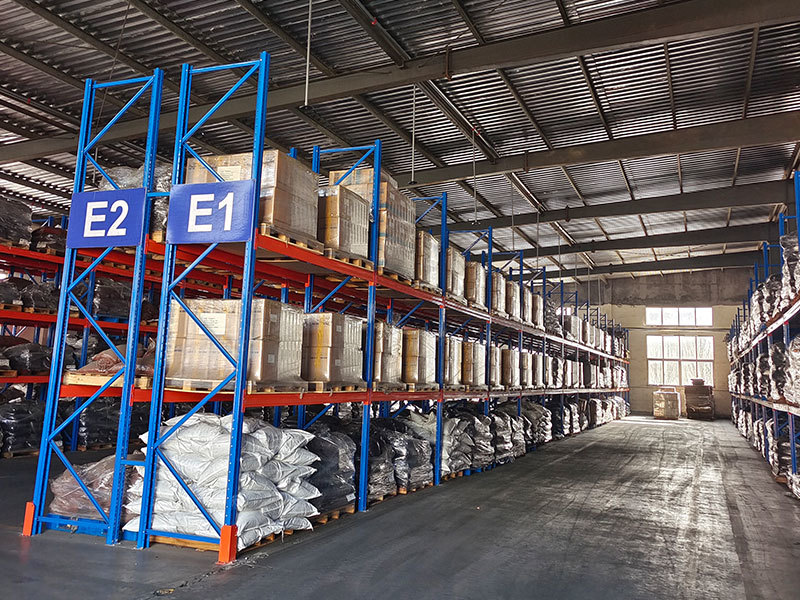
Dry, covered storage at origin protects the same properties your own warehouse needs at destination.
Common Buyer Mistakes
1. Cutting the inner liner to save packaging cost. A few cents per unit saved on the liner routinely turns into a full lot written off after a humid sea voyage. Specify the liner in the contract.
2. Accepting a COA that does not name the shipped batch. A generic COA for the article code tells you what the product usually tests like, not what is inside the drums on the water.
3. Leaving HS classification and dangerous-goods status to the forwarder at the last minute. Reclassification after booking means re-documentation, and re-documentation means the vessel sails without your cargo.
4. Buying insurance "all risks" without checking the moisture and packaging clauses. Read what the policy requires in terms of packaging and notice of damage; unlined or unlabelled cargo can weaken a claim.
5. Skipping the pre-shipment sample. The cheap window to catch a shade or strength problem is before departure. Once the container is on the water, your only remedy is a claim, not a correction.
Buyer Checklist — Before the Container Leaves China
FAQ: Dye Export Packaging and Documentation
Should I order dye in drums or in bags?
For full container loads into a dry, covered warehouse, 25 kg bags on pallets are the most economical and load efficiently. Choose fiber drums when the route is humid, when the consignment is LCL, when several handling steps are involved, or when your dyehouse wants reclosable units for partial consumption.
Are dyes classified as dangerous goods?
It depends on the individual product. Many dye powders are shipped as ordinary general cargo, but some preparations fall under environmentally hazardous substance entries, and liquid products may carry their own classification. The determination must be made from the product SDS for the specific item and confirmed by your forwarder before booking.
Which documents should be in my hands before the container sails?
Commercial invoice, packing list, draft bill of lading, certificate of origin, SDS, batch-numbered COA for each lot shipped, and your pre-shipment sample. Insurance documentation and loading photos should follow with the final document set. Ask for a fixed deadline — documents delivered before vessel departure, not after arrival.
How do I prevent moisture damage in a sea container?
Inside liners on every unit is the first control, followed by a dry inspected container, desiccant where the route warrants it, and stowage that leaves the doors clear. Inspect at unloading and photograph any condensation or caking immediately — insurance claims depend on prompt documented notice.
Can several dye classes be consolidated in one shipment?
Yes, and it is common for buyers who take acid, direct and leather dyes from one manufacturer. The requirement is unambiguous segregation: correctly labelled units, no broken liners, and a packing list that identifies each article and batch separately so customs and your own receiving team can verify line by line.
How should dye be stored after it arrives?
Cool, dry, out of direct sunlight, on pallets rather than on the floor, with liners resealed after opening. Respect the shelf life stated on the COA or datasheet and rotate stock by batch number so the oldest material is consumed first.
Which Incoterm keeps the documentation under my control?
Many first-time importers start with FOB, which keeps the choice of forwarder and consolidation arrangements on your side, and move to CIF or DAP once they are confident in the supplier's logistics. Whichever term you choose, define the packaging specification, the document list and the delivery deadline separately in the contract.
Get the Packing Spec and Document List in Writing
Tell us your product, destination port and receiving conditions — we will come back with the packaging format, pallet configuration, net weight per pallet and the full document set for your order, before you commit.
Factory: +86 138 6922 6336 | WhatsApp: +44 7895 584241
Email: info@dyespro.com
Conclusion
Shade gets negotiated. Packaging and documentation usually just happen — which is exactly why they cause the delays. Write the liner, the marking, the pallet standard and the document list into the contract the same way you write in price and delivery. Then hold the batch-numbered COA, the retention sample and the pre-shipment sample before the container leaves. Those four habits prevent the great majority of dye shipment failures, and none of them cost anything close to a damaged lot or a stopped container.
Dezhou Jinmao Chemical Co., Ltd.
Manufacturer of GLIDE™ leather dyes, acid dyes, direct dyes, textile, paper, fur and wood dyes.
Factory: +86 138 6922 6336 | WhatsApp: +44 7895 584241 | Email: info@dyespro.com
www.dyespro.com