Exporting Dyes from China: Packaging, Shipping & Documentation That Actually Arrives
Your dye order is packed and paid for, and the powder matches the lab sample. Then the part nobody warned you about begins: getting the drums from the factory in Dezhou to your warehouse without damage, delay, or a customs surprise. For most first-time buyers, export logistics — not dye chemistry — is where the money leaks. A wrong Incoterm leaves you paying for freight you never budgeted. A missed dangerous-goods check stops the container at the port. This guide explains how dye shipments from China are actually packed and moved, which documents matter at each step, and how to choose the right Incoterm and freight method so the batch arrives dry, on shade, and on time.
Key Takeaways
- Dye powders are hygroscopic — the PE liner, sealed bags, and palletization decide whether the batch arrives dry and usable.
- Most acid, direct, and leather dyes are not dangerous goods, but zinc-complex acid dyes can be UN 3077 Class 9 — check the SDS before booking.
- The Incoterm decides who owns the risk at each stage — first-time buyers are safer with FOB or CIF than EXW or DDP.
- Sea freight is the economic default (25–40 days); air is for urgency, rail for Europe, and LCL only makes sense below about 10 metric tons.
- A complete export file — invoice, packing list, bill of lading, COA, SDS, and ISPM 15 certificate — prevents most border delays and claims.
What Is Involved in Exporting Dyes from China?
Exporting is the whole chain between a finished batch in the mill's warehouse and the same batch cleared through your customs: export packing, the Chinese export declaration, international freight, destination clearance, and delivery. China's dye industry is concentrated in Shandong, Zhejiang, and Jiangsu provinces; factories in Shandong — where Dezhou Jinmao Chemical Co., Ltd. is located — typically truck cargo to Qingdao port.
The practical question is always the same: who does what, and who pays if something goes wrong? The supplier handles the export side when the Incoterm says so; the buyer handles the destination side. Small trial orders move by courier in days, bulk orders by sea in weeks. Payment terms usually follow the documents — T/T against the scanned export documents, or an L/C where the bank pays only when the paperwork matches.
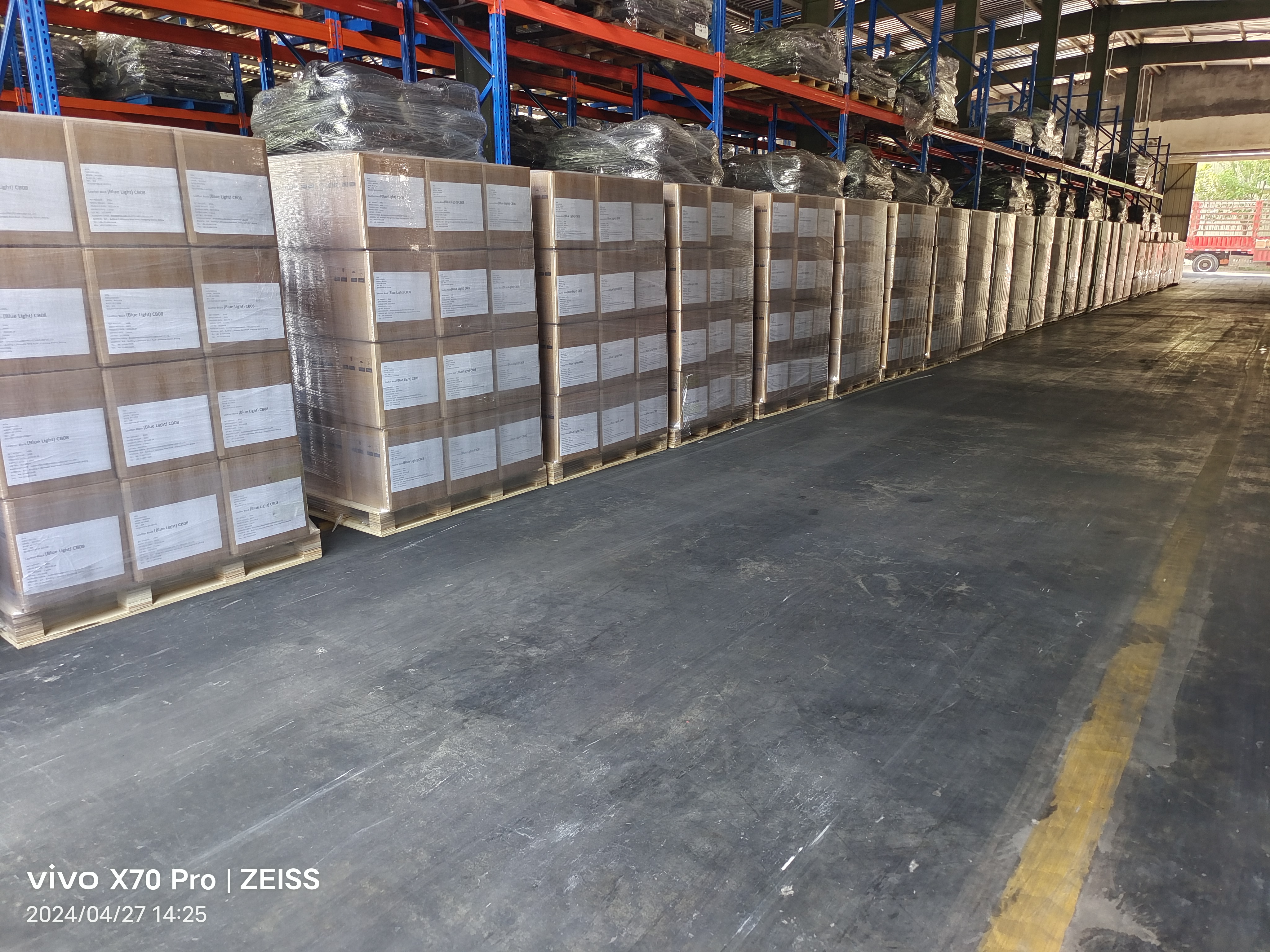
Palletized export cartons of GLIDE™ dye powder ready for loading.
Technical Specifications: How Dye Shipments Are Packed
These are the packaging conventions on most bulk dye orders from China. Mills differ in detail — confirm each point in writing — but this is the baseline a serious supplier should meet.
| Component | Typical specification | Why it matters |
|---|---|---|
| Inner bag | Heat-sealed PE liner, food-grade where required | Dye powders absorb moisture; a sealed liner stops caking and strength drift |
| Outer bag | 25 kg laminated kraft paper bag | Standard handling unit for powder dyes |
| Drum option | 25 / 50 kg fiber drum with PE liner | Extra protection for sensitive shades; easy re-shipment |
| Pallet | ~1,000–1,200 kg; about 40 bags or 20–24 drums; shrink-wrapped with corner boards | Safe forklift handling and stable container stacking |
| Pallet wood | ISPM 15 heat-treated (HT) marked, or plywood / plastic pallets | EU, US, and Australian customs reject unmarked solid wood |
| Container load | ~20–24 mt of bagged dye per 20-ft container | Defines the FCL threshold for economical shipping |
| HS codes | 3204.12 acid dyes; 3204.14 direct dyes; 3204.19 other synthetic organic dyes | Used on your customs declaration; verify per product |
| DG status | Most acid / direct / leather dyes: non-dangerous goods; zinc-complex acid dyes may be UN 3077 Class 9 | Changes booking, labeling, and documentation |
Comparison of Shipping Options
There is no single best way to ship dyes — it depends on volume, destination, and how fast you need the goods. Transit times below are typical ranges and vary with route and season.
| Option | Typical transit | Best for | Cost note |
|---|---|---|---|
| Sea freight — LCL | 25–40 days | Trial orders of 1–5 mt | Low per kg but high per m³; goods share the container |
| Sea freight — FCL (20-ft / 40-ft) | 25–40 days | Bulk orders of about 10–24 mt | Lowest cost per kg; full control of the container |
| Air freight | 3–7 days | Urgent restocks of 500 kg–2 mt | High per kg; check airline DG rules |
| China–Europe rail | 18–25 days | EU destinations at mid volumes | Medium cost; tighter DG rules than sea |
| Courier (DHL / FedEx / UPS) | 3–7 days | Samples of 1–25 kg | Highest per kg, simplest paperwork |
How to Choose the Right Shipping Setup: 5 Steps
- Fix the order size and the target landed cost first. Work backwards from the price per kg you can afford delivered to your warehouse — this filters out most wrong choices early.
- Decide which Incoterm you can actually manage. Without a forwarder or customs broker at your end, FOB or CIF via the supplier's forwarder is far simpler than EXW, where you own the cargo at the factory gate.
- Match the freight method to volume and deadline. Under about 10 mt, LCL or courier samples win; above that, FCL. Air pays only when downtime costs more than the freight difference.
- Confirm the dangerous-goods classification before booking. Ask for the SDS for the exact batch and have your forwarder confirm the UN status in writing.
- Lock a written shipping checklist with the supplier. Agree on packing photos, batch labels, pallet counts, marks, and the document set before the container door closes — not after the ship sails.
Quality-Control Evidence to Get Before the Shipment Leaves
Export documents prove the deal; they do not prove the quality. Protect yourself with evidence tied to the batch you are receiving:
- Batch-numbered COA before dispatch. It should carry a batch number printed on the bags or drums, so the paperwork and the cargo match.
- Packing photos or video. Ask for images of labels, sealed bags, palletization, and container loading — routine for serious exporters.
- A retained sample from the same batch. Request that the mill keeps a sealed reference sample for a defined period, typically 12 months.
- Optional third-party inspection. Pre-shipment inspection by SGS, Bureau Veritas, or Intertek can be arranged before production or loading.
- Document discipline for L/C payments. Every document must match the credit exactly — one mismatch can trigger a discount or a delay.
Packaging & Shipping: The Details That Decide the Outcome
Moisture is the enemy. Dye powders are hygroscopic. A heat-sealed PE liner, intact bags, and dry pallets are not cosmetic details — moisture pickup changes strength and can cause caking that ruins your dissolution step.
Palletization and ISPM 15. Confirm solid-wood pallets carry the ISPM 15 heat-treated (HT) stamp; EU, US, and Australian authorities reject unmarked wood. Plywood or plastic pallets sidestep the issue entirely.
Dangerous-goods rules. The majority of acid, direct, and leather dyes are not classified as dangerous goods for transport. The exception: zinc-complex acid dyes can fall under UN 3077 (Environmentally hazardous substance, solid, n.o.s.), Class 9, which needs a different booking, marking, and declaration. Get the SDS, let the forwarder classify it, and never let the factory declare a DG product as general cargo — that is how containers get held and fines get issued.
The document set. A complete export shipment usually carries: commercial invoice, packing list, bill of lading or air waybill, certificate of analysis, safety data sheet, certificate of origin, the ISPM 15 / fumigation certificate if applicable, and an insurance certificate when the Incoterm makes you responsible for coverage. Ask your supplier for the full list in writing before you pay the balance.
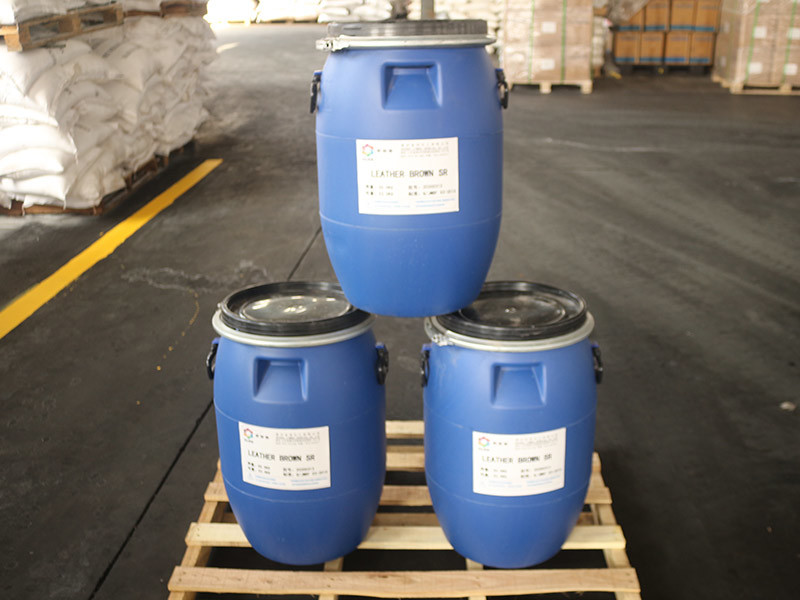
Fiber drums and kraft bags — the two standard export formats for dye powder.
Common Buyer Mistakes (and How to Avoid Them)
1. Buying EXW without a forwarder lined up. Under EXW you own the cargo at the factory gate. With no agent in China, the goods sit and you pay for the chaos. Use FOB or CIF until you have a trusted forwarder.
2. Ignoring dangerous-goods classification until the port. Discovering a zinc-complex dye is UN 3077 after booking general cargo means rebooking, re-labeling, and demurrage. Confirm the SDS before you book.
3. Choosing LCL for a near-FCL quantity. Below roughly 10 mt, LCL is fine; above that you pay more per kg than a full container and share space with heavy or dirty cargo.
4. Skipping the ISPM 15 check on wooden pallets. One unmarked pallet can hold the whole delivery at your border — confirm the stamp in the packing photos.
5. Accepting a verbal packing list. No batch numbers, no photos, no marks in writing — then the arrival count does not match the invoice and nobody can prove what left the factory.
Buyer Checklist — Exporting Dyes from China
FAQ: Exporting Dyes from China
What is the typical MOQ for bulk dye orders from China?
Samples ship by courier from 1 kg up. Bulk orders typically start around 500–1,000 kg per shade, and a 20-ft container loads 20–24 mt of bagged dye. For a first trial, LCL or courier keeps the order small.
Which Incoterm should a first-time buyer use?
FOB or CIF through the supplier's forwarder is the usual recommendation: you know the freight cost upfront, the supplier handles the Chinese export side, and you arrange the destination leg with your own broker.
Are dyes dangerous goods to ship?
Most acid, direct, and leather dyes are not dangerous goods for transport. The exception is zinc-complex acid dyes, which can be UN 3077 (Class 9). Check the SDS and let your forwarder confirm.
How long does sea freight from China take?
Roughly 25–40 days to most major ports, depending on route, transshipment, and season. Air takes 3–7 days, China–Europe rail about 18–25 days, and courier samples 3–7 days door to door.
What documents do I need to clear the shipment at my border?
Typically: commercial invoice, packing list, bill of lading or air waybill, certificate of analysis, safety data sheet, and sometimes a certificate of origin and the ISPM 15 / fumigation certificate. Ask your supplier for the full list in writing before dispatch.
What happens if the batch arrives off-shade or damaged?
Photograph the delivery, keep the retained sample from the same batch, and notify the supplier with the batch number. A claim procedure agreed before shipment — acceptance criteria, timelines, and remedy — makes this fast and fair.
Can I receive dye samples by courier before a bulk order?
Yes. GLIDE™ Dyes ships 1–25 kg samples by international courier with a batch-numbered COA, so you can confirm shade and fastness before committing to volume.
Follow-up reading: for the pre-shipment detail — packaging formats and liners, unit marking, HS classification, and the batch-numbered COA and samples to collect before dispatch — see Dye Export Documentation & Packaging: What to Specify Before Your Container Leaves China.
Ship Your Next Dye Order Without the Guesswork
Logistics should be the boring part of your order — not the risk. GLIDE™ Dyes from Dezhou Jinmao Chemical Co., Ltd. ships with batch-numbered COAs, packing documentation, retained samples, and the paperwork your customs broker needs. Tell us your volume, destination, and deadline — we will quote the dye and the shipping setup together.
Start with samples and a shipping plan:
📧 info@dyespro.com | 📞 +86 138 6922 6336 | 💬 WhatsApp: +44 7895 584241
Dezhou Jinmao Chemical Co., Ltd. — Manufacturer of GLIDE™ dyes
Factory: Dezhou, Shandong Province, China
📞 Factory: +86 138 6922 6336 | 💬 WhatsApp: +44 7895 584241 | 📧 Email: info@dyespro.com
Website: www.dyespro.com