Acid Dyes vs Direct Dyes: What the Data Sheet Tells You That the Drum Label Doesn't
Two drums arrive: "Acid Black" and "Direct Black," both from reputable suppliers at a similar price per kilo. Your last dyer used acid for everything, so the direct drum sits in the warehouse while someone improvises a recipe. Six weeks later the shade is right on the bench and wrong on the drum, and nobody can say whether the dye, the water or the pH is to blame.
The label is not the problem. "Acid" and "direct" describe a recommended application route, not a fixed chemistry — both are anionic and both strike an amino-rich substrate under the right conditions. What decides whether a dye works in your plant sits in six or seven fields of its technical data sheet. Here is how to read them.
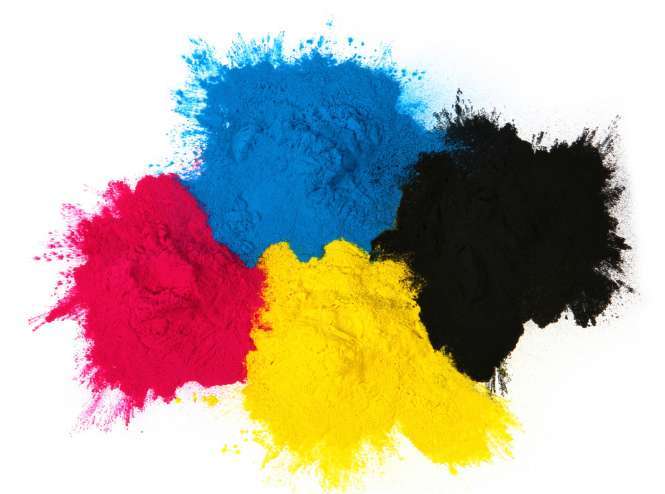
Same class, different constitution: two powders labelled "direct" can behave nothing alike in the drum.
Key Takeaways
- Both classes are anionic. Molecule size, substantivity and exhaustion pH separate them, not substrate compatibility.
- Acid dyes need protonated sites. They fix on amino groups that open at low pH — so pH control matters more than dye choice on nylon, wool and chrome-tanned leather.
- Direct dyes trade wet fastness for levelness. They exhaust near neutral with electrolyte and penetrate deeply.
- Strength percentage is the most abused number on a TDS. A 200% product at twice the price is often the cheaper dye.
- Only your own substrate proves fit. A dip on your crust, in your water, is evidence; the supplier's reference crust is not.
What Actually Separates Acid Dyes from Direct Dyes?
Both are anionic dyes, usually sodium salts of sulfonic acids: water-soluble, applied from an aqueous bath, fixed by ionic attraction. Neither needs a mordant. That is why the classes are more interchangeable than most buyers assume — and why a dye can be sold under either heading.
Acid dyes: small molecules, low pH
Acid dye molecules are small. To fix, they need the substrate to present protonated amino (–NH₃⁺) sites, which only happens below the isoelectric point. On wool and nylon that means a genuinely acidic bath; on chrome-tanned leather, dyeing after the chrome is fixed with the pH brought down by formic acid. Small molecules migrate well, giving bright shades and good penetration — and meaning the dye keeps moving if pH, temperature or time drift. Levelling types dye uniformly at the cost of wet fastness; milling types build fastness but punish any pH error with patchiness.
Direct dyes: larger, flatter, substantive
Direct dyes are bigger, flatter, more linear molecules with strong affinity for cellulose. They exhaust by substantivity, helped by electrolyte that suppresses repulsion between dye and substrate, at neutral to mildly alkaline pH. That is what makes them useful on leather: on suede, splits and articles where shade must sit inside the material, a direct at near-neutral pH penetrates deeply and levels well. The trade-off is fastness — without the ionic anchor acid dyes get from protonated amino groups, directs bleed, water-spot and wet-crock more readily.
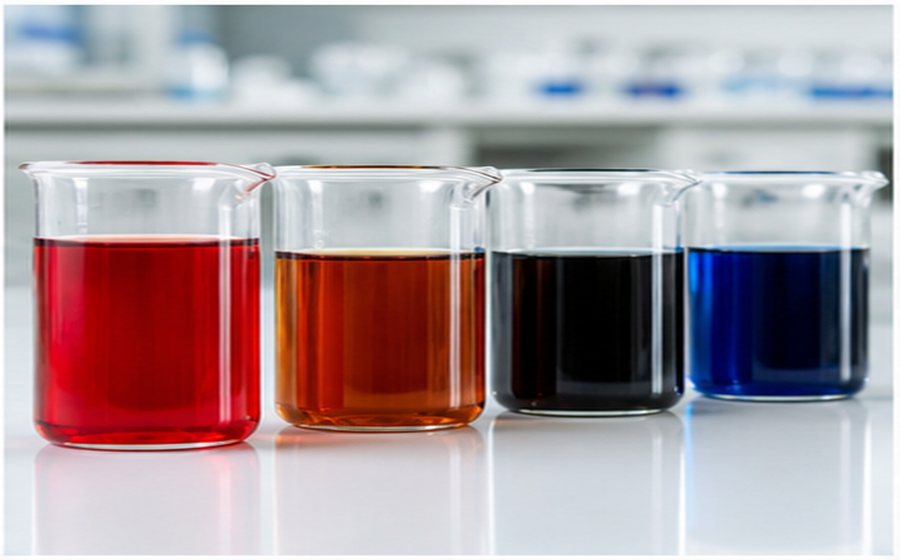
Acid dyes: small, mobile molecules that need a low-pH bath to anchor on amino groups.
Technical Specifications: The Fields That Decide Fit
A complete TDS states far more than colour and class. These are the fields that change your recipe, your effluent load and your reject rate.
| Data Sheet Field | Typical Acid Dye | Typical Direct Dye | Why It Matters |
|---|---|---|---|
| CI number / constitution | Stated per shade | Stated per shade | Compare chemically, not by trade name |
| Colour strength | Often 100–200% | Often 100–150% | Sets real cost per kilo of dyed goods |
| Solubility at 90 °C | Generally high, varies by shade | Moderate; some shades need hot water | Decides whether stock solutions are practical |
| Application pH window | Low; strong-acid below milling types | Near neutral | The most common cause of shade drift |
| Electrolyte content | Usually low | Can be significant | Adds to bath load, conductivity and cost |
| Fastness data with method | Light, water, perspiration, rub | Light, water, perspiration, rub | A number without a method is not a spec |
Strength deserves suspicion. It is measured against an internal standard, not an absolute scale, so 100% from one plant is not 100% from another. Two quotes for "the same" black can differ 30% in price and be economically identical — or differ 10% and hide a 40% consumption gap. Get the strength basis in writing, then check it with a dyeing of known concentration on your substrate.
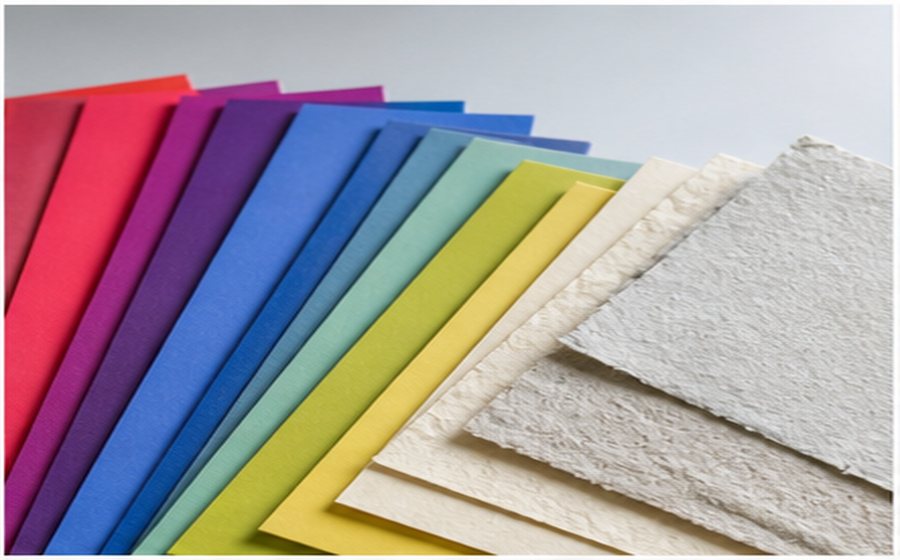
Direct dyes: larger, flatter molecules that exhaust on substantivity and electrolyte.
Comparison of Options: Route by Route
The useful question is which class fits this article, this machine and this fastness spec.
| Route | Better Fit | Working Conditions | Trade-off |
|---|---|---|---|
| Chrome-tanned upper leather | Acid dyes | Acid pH, controlled rise, penetration before fixation | Good fastness; pH drift causes patchiness |
| Suede, splits, through-dyed | Direct dyes | Near-neutral, electrolyte assisted, longer dwell | Deep penetration, weaker wet fastness |
| Wool and nylon | Acid dyes | Acidic bath, levelling agent, gradual heating | Bright and level; migration must be controlled |
| Cotton, viscose, blends | Direct dyes | Neutral to alkaline, heavy electrolyte, near-boil | Simple process, moderate wash fastness |
| Paper stock and surface | Direct dyes | Neutral, retention aid, high dilution | Cost-efficient; shade shifts with stock pH |
| Vegetable-tanned crust | Neither, by default | Trial required — tannins interfere with strike | Pretest before committing to a class |
How to Choose the Right Option in Five Steps
- Write the performance spec before the RFQ. Substrate, shade standard, fastness method and minimum, process pH, water hardness, machine and finishing operations. Without it, prices are not comparable.
- Request the TDS and a batch COA for the grade offered — not a family brochure. Check CI number, strength basis, pH window and fastness methods.
- Run the lab dip on your substrate, in your water. Supplier dips on reference crust flatter the dye; your water hardness and pH control are half the result.
- Test fastness on the finished article. Fatliquor, topping and finishing films change rub and water resistance, so a dye that passes on crust can fail after plating.
- Compare cost per kilo of dyed goods, then run a pilot lot. Include strength, exhaustion, added electrolyte, re-dye risk and lab time, and hold a retention sample before bulk release.
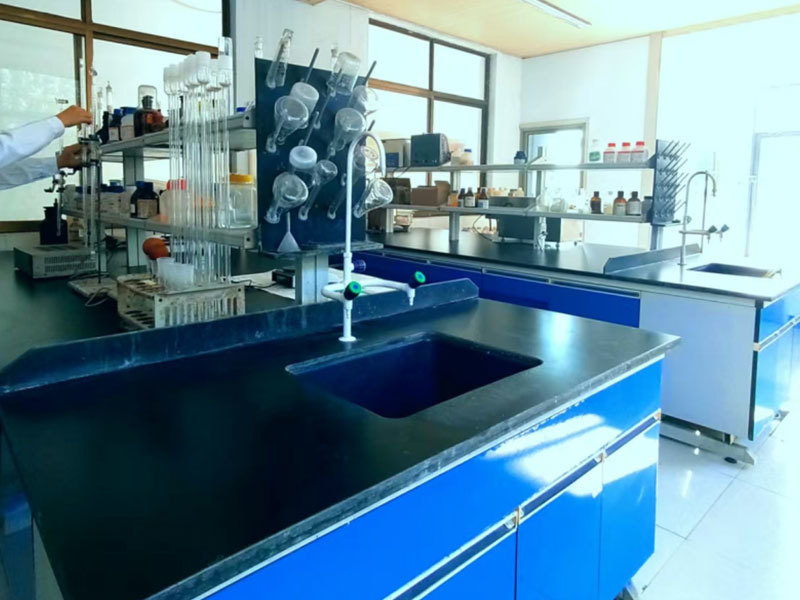
A lab dip is only evidence if it was run on your crust, your water and your pH.
Quality-Control Evidence to Demand
You do not need to audit a dye plant to protect yourself — four documents and one habit will do.
- Batch-level COA — strength against a retained standard, moisture, insolubles, solution pH and shade. A COA that repeats the TDS values is a datasheet with a date on it.
- Fastness reports with method numbers — light, water, perspiration and rub, to the method your customer's lab recognises. Ask for figure and method together; "good fastness" is not a value.
- Retained samples — one sealed sample per batch, held by both parties. Most shade disputes are settled by comparing them, not by argument.
- Written change notification — covering raw-material source, process and formulation. Silent reformulation is the most expensive consistency failure.
The habit: dye a small lot from every batch against your retained standard before the drum enters production. Fifteen minutes of lab work catches drift before it becomes a customer claim.
Packaging & Shipping Notes
Dye powder is usually not dangerous goods, but it is moisture-sensitive, dusty and shade-critical — three problems packaging has to solve.
- Inner liner first. The polyethylene liner inside bag or fibre drum is the real moisture barrier; "25 kg bag" without it is how you receive caked powder in a humid port.
- Palletised and stretch-wrapped with corner protection so drums do not abrade in LCL, plus desiccant where drums sit in a hot container.
- Correct HS classification. Acid and direct dyes fall in separate subheadings, so mixed shipments need separate lines — misclassification is a customs delay, not a paperwork detail.
- SDS with every shipment — your warehouse team needs the dust guidance, not just the broker.
Five Common Buyer Mistakes
Pre-Order Checklist
Frequently Asked Questions
Can I use a direct dye in an acid bath, or an acid dye at neutral pH?
Partly, and that "partly" is where money is lost. Directs strike in acid but lose levelness and may precipitate if solubility is marginal. Acids at neutral pH exhaust poorly because amino sites stay unprotonated, giving pale, uneven results. Trial both on your substrate.
Why does my direct-dyed suede crock so badly?
Directs anchor by substantivity rather than ionic bonding, so unfixed dye sits near the surface and transfers on rubbing. Longer dwell, better rinsing, an aftertreatment or a switch to an acid dye each move the number — but only a rub test on the finished article tells you if it moved enough.
Do the two classes behave the same on vegetable-tanned leather?
Not reliably. Vegetable tannins occupy sites and change surface charge, so both classes can strike unevenly or bleed — a pretest-first situation regardless of what the data sheet says.
What fastness information should a data sheet contain?
Light, water, perspiration and rub fastness, each with the method referenced and the depth measured. Fastness is depth-dependent, so a figure without a depth is only indicative.
Are dye powders classified as dangerous goods?
Most are not, but classification depends on the specific product and its impurities. The SDS is the authority and should travel with every shipment.
Conclusion
The decision is a matter of conditions, not identity. Both classes are anionic and both will dye an amino-rich substrate; the one that works is the one whose pH window, solubility, electrolyte load and fastness profile match the process you run. Read the data sheet before the price list, then prove the shortlist on your own crust, in your own water.
Send Us Your Substrate and Fastness Spec
Dezhou Jinmao Chemical Co., Ltd. manufactures GLIDE™ acid, direct, leather, textile and paper dyes. Tell us your substrate, target shade, process pH and required fastness methods, and we will recommend the class and grade, then send the TDS, a batch COA and a lab dip on request.
Factory: +86 138 6922 6336 | WhatsApp: +44 7895 584241
Email: info@dyespro.com
Dezhou Jinmao Chemical Co., Ltd.
Manufacturer of GLIDE™ dyes — leather, acid, direct, textile, paper, fur, wood, and aluminium applications.
Factory: +86 138 6922 6336 | WhatsApp: +44 7895 584241 | Email: info@dyespro.com
Web: www.dyespro.com