ZDHC Level 3 Dyes: What the Certificate Covers — and What Your Brand Audit Still Asks For
You hold a valid ZDHC Level 3 certificate for your dye. Then the audit arrives and the auditor asks a question the certificate cannot answer: which shades on this order does it actually cover, and what changed since it was issued?
That gap is where tanneries lose audit points. A Level 3 certificate is a precise instrument with sharp edges: one formulation, one revision, one MRSL version, one date. It says nothing about your other shades, your process water, your auxiliaries, or the drum blended last week. This guide maps those edges and shows how to build a compliance file per shade rather than per supplier.
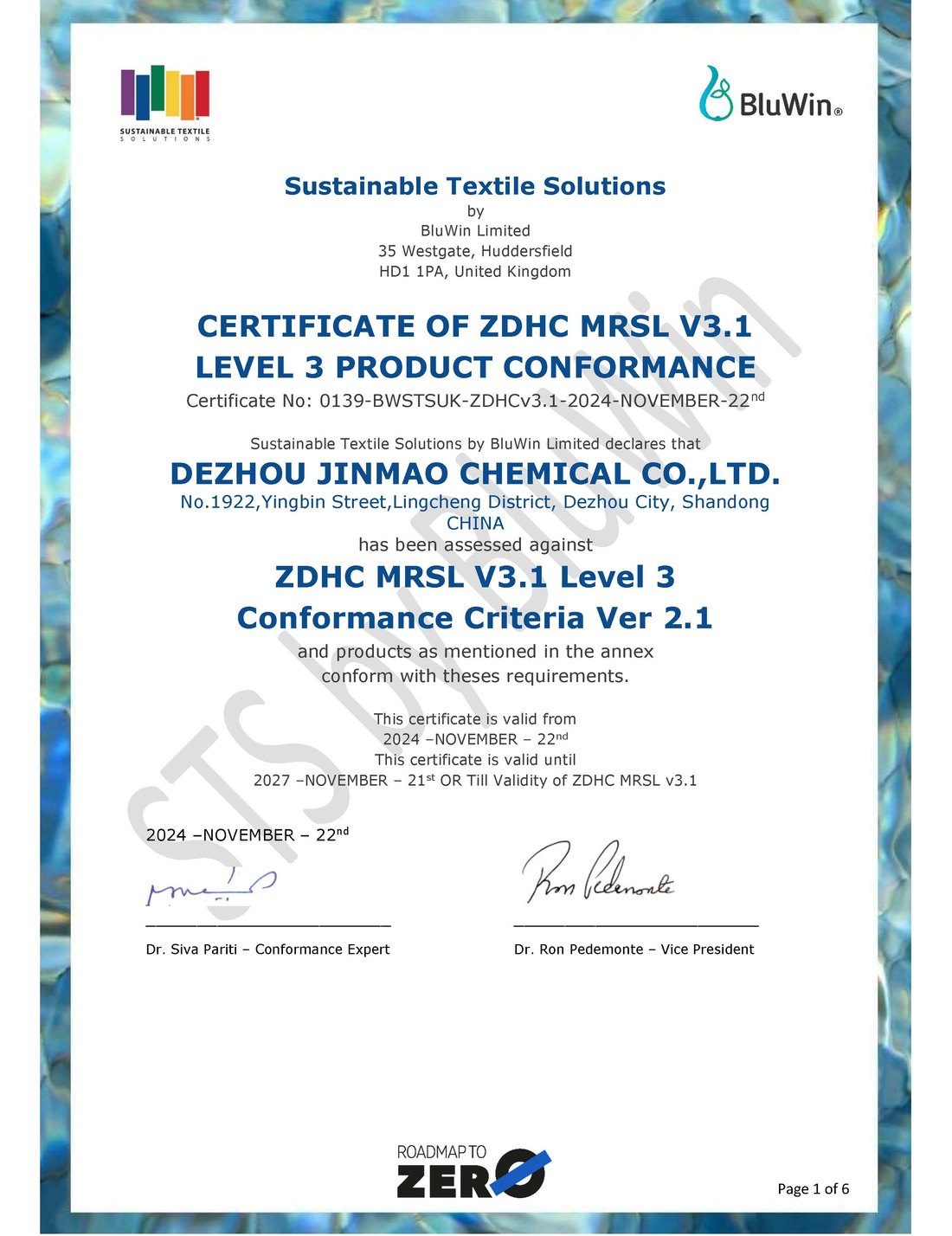
A ZDHC conformance certificate names a product code and a validity window — both must match the drum you receive.
Key Takeaways
- A certificate covers a product code, not a supplier. One Level 3 document for one black tells an auditor nothing about your brown, your red, or your competitor's equivalent.
- Scope ends where your process begins. MRSL conformance covers the chemical as supplied; it does not cover dosing errors, contaminated process water, or cross-contamination in shared equipment.
- Validity is a two-part test. The certificate must be in date and issued against the MRSL version your brand accepts — current but superseded still fails.
- Build the file per shade, not per shipment. A shade-to-certificate matrix is what turns a folder of PDFs into an audit-ready compliance file.
- Reformulation voids the claim until reassessed. Any change in raw material source, process, or formulation revision requires fresh conformance evidence before the next bulk lot ships.
What Does a Level 3 Certificate Actually Cover?
ZDHC Level 3 conformance means an independent assessor reviewed the full formulation of a specific product — not just tested the finished powder — and confirmed no MRSL-restricted substance is present above the permitted limit, whether as an added ingredient or a known impurity. That is a strong statement. It is also a narrow one.
Concretely, the certificate covers four things: product identity (trade name and code), the formulation as it stood at the assessment date, the MRSL version it was assessed against, and the assessment body that signed it. Everything else is outside its boundary.
Inside the boundary
- The specific dye product code named on the document
- Intentionally added ingredients and known impurities in that formulation
- Restricted substance categories defined by the cited MRSL version
- The validity period stated by the issuing assessor
Outside the boundary
- Other shades, strengths, or product codes from the same supplier
- Your dyeing auxiliaries, carriers, levelling agents, and finishes
- Your process water, pH control, and dosing accuracy
- Cross-contamination from shared drums, scoops, or lines
- Storage degradation or moisture pickup after the drum is opened
- The finished leather article against a brand RSL

Conformance records are only useful if they are traceable to a batch — the lab file and the shipping file have to speak the same language.
Technical Specifications: Reading the Certificate Field by Field
Most audit failures are not caused by missing certificates. They are caused by a field on the certificate that does not match a field on the paperwork around it. Read each document against this checklist before it enters your compliance file.
| Certificate Field | What It Establishes | What It Must Match | Common Failure |
|---|---|---|---|
| Product trade name | The commercial identity of the assessed dye | Your PO line description and drum label | House name on the certificate, marketing name on the invoice |
| Product / batch code | Which formulation was assessed | The code printed on the drum and the COA | Certificate names a family; drum carries a shade variant |
| Conformance level | Depth of assessment (Level 3 = formulation review) | Your brand's stated minimum requirement | Level 1 test report presented as Level 3 |
| MRSL version | Which substance limits were applied | The version named in your brand's specification | Certificate on an older version than the brand accepts |
| Assessment body | Who performed the independent review | A body your brand recognises | Self-declaration formatted to look like third-party |
| Issue and expiry dates | The window during which the claim holds | Your shipment and arrival dates | Certificate expires in transit before goods are received |
| Formulation revision | Which version of the recipe was reviewed | Current production revision at the plant | Silent reformulation after assessment |
Comparison of Compliance Routes
Four routes exist for evidencing dye compliance, and they differ sharply in what they prove and what they cost you in effort.
| Route | What It Proves | Typical Effort | Audit Strength | Best Used For |
|---|---|---|---|---|
| Supplier self-declaration letter | That the supplier asserts conformance | Low — a signed PDF | Weak; rarely accepted alone | Early screening only |
| Finished-product test report (Level 1 basis) | That one sample of the finished dye passed a lab screen | Medium — sampling and lab turnaround | Moderate; snapshot, not formulation-level | Supplementary evidence, spot checks |
| Level 2 third-party certificate | An accredited body certified the product against MRSL limits | Medium — depends on supplier holdings | Good for many programmes | Markets where brands accept Level 2 |
| Level 3 certificate + Gateway listing | Full formulation reviewed; traceable, dated, product-specific | Low for you — supplier holds it | Strongest; the default for footwear and apparel brands | Any order destined for a brand-audited supply chain |

Batch coding at the plant is what makes a certificate traceable to a specific drum downstream.
How to Build a Compliance File That Passes
Choosing evidence is a five-step sequence, and skipping step one is the costliest error: it means collecting the wrong documents correctly.
- Extract the exact requirement from your brand. Not "ZDHC compliant" — get the written spec: required level, accepted MRSL version, recognised assessment bodies, whether Gateway listing is mandatory, and the re-certification interval. That paragraph becomes your acceptance criteria.
- List every product code your BOM uses. Twelve shades across three dye classes means twelve certificates, not one. Include auxiliaries if the brand's scope covers the whole chemical inventory.
- Request certificates per code, with validity dates and MRSL version stated. Ask in the same email for the COA template and a batch-numbering explanation. Suppliers who answer all three quickly usually have a real system behind the paperwork.
- Build a shade-to-certificate matrix. One row per product code, with columns for certificate reference, level, MRSL version, issue date, expiry, and batch numbers received against it. That sheet is what you hand the auditor instead of a folder.
- Write change control into the supply agreement. Commit the supplier to notifying you before any formulation, raw-material source, or site change, and to supplying re-assessed evidence before the next shipment. Without that clause, your matrix goes stale silently.
Quality-Control Evidence: What the File Should Contain
A complete file for one dye product holds six document types; the discipline is keeping them aligned.
- The conformance certificate itself — current, product-specific, naming the MRSL version and the assessment body.
- The Gateway or equivalent listing reference — a traceable identifier you can check independently.
- Batch-numbered certificate of analysis — strength, moisture, pH, solubility, and shade reference for the lot shipped.
- Retention sample record — a sealed sample per lot, held for a defined period, so a dispute can be tested rather than argued.
- Change notification log — dated record of any formulation or source change and the re-assessment that followed.
- Packing record — drum IDs and batch codes as shipped, matching the COA and certificate.
One practical test catches most problems early: pick any drum from your last delivery and try to walk from its batch number back to a certificate without asking the supplier for help. If that walk requires an email, the chain is broken.
Independent testing answers a different question: a lab result tells you what was in that sample, not what the supplier intends to put in the next lot. Use testing to confirm the file, not replace it.
Packaging, Labelling & Document Flow
Compliance evidence travels with the cargo or not at all. Three details decide whether the file still matches the goods on arrival.
Label integrity. The batch code on the drum must be legible and identical to the code on the COA. If your supplier maps internal lot numbers to customer-facing codes, insist the mapping is printed on the label rather than explained by email later — a moisture-damaged inkjet label on a fibre drum is unreadable within weeks.
Segregation. Conformant dye shipped alongside non-conformant chemistry is a documentation hazard even when the drums never touch. Group the container manifest by compliance status so the boundary is visible.
Document set. Packing list, COA, and conformance certificate should travel as one packet, batch-numbered, with the commercial invoice referencing the same codes. When these three disagree on a product code, the broker will not care — the brand auditor will, months later.
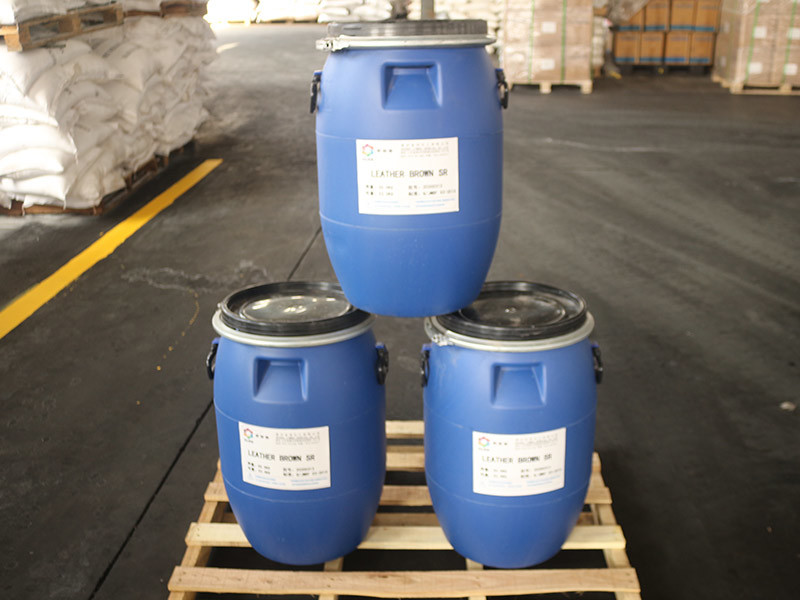
Batch labels and the document pouch are part of the compliance record, not just logistics.
Five Common Buyer Mistakes
Buyer Checklist Before You Release the PO
Compliance file — per product code
Frequently Asked Questions
Does one ZDHC Level 3 certificate cover all shades from a supplier?
No. Conformance attaches to a specific formulation and product code. Different shades are different formulations, even when they share a dye class and production line, so each one needs its own certificate.
What happens to conformance if the supplier reformulates?
The existing certificate no longer describes the product being made. The formulation must be re-assessed before the changed product ships, and your file needs the new certificate plus a dated change record. This is why a change-notification clause in the supply agreement matters more than the certificate itself.
Is a Level 3 certificate enough on its own for a brand audit?
Rarely. Auditors typically want the certificate plus batch traceability to the drums you received, a COA for the lot, and evidence that the requirement was carried into your purchasing documents. The certificate is the anchor, not the whole file.
How often should conformance documentation be refreshed?
At minimum whenever the certificate expires, whenever the MRSL is revised to a version your brand adopts, and whenever the supplier changes formulation, raw-material source, or manufacturing site. Many buyers also re-verify annually as routine.
What should I do if a certificate cannot be traced on the Gateway?
Treat the claim as unproven until the supplier resolves it. Ask for the listing reference, the assessment body, and the issuing contact. A genuine Level 3 holder can produce all three quickly; repeated inability to do so is itself the answer.
Conclusion
The value of a ZDHC Level 3 certificate is not that it exists — it is that it fits your shade, your MRSL version, your shipment dates, and the drum in front of the auditor. Buyers who collect documents end up with a folder. Buyers who maintain a chain — product code to batch to certificate to change log — end up with a file that closes audits without discussion.
Start with the written brand requirement, build the matrix from your actual BOM, then make change notification a contractual obligation. The paperwork burden drops once the structure is right, because you stop re-litigating the same question every order.
Need Conformance Documents Before You Commit?
Dezhou Jinmao Chemical Co., Ltd. manufactures GLIDE™ leather, acid, and direct dyes under ZDHC MRSL conformance. Send us your product codes and destination market, and we will return the current certificate for each code, a batch-numbered COA, and our change-notification terms with the quotation.
Factory: +86 138 6922 6336 | WhatsApp: +44 7895 584241
Email: info@dyespro.com
Dezhou Jinmao Chemical Co., Ltd.
Manufacturer of GLIDE™ dyes — leather, acid, direct, textile, paper, fur, wood, and aluminium applications.
Factory: +86 138 6922 6336 | WhatsApp: +44 7895 584241 | Email: info@dyespro.com
Web: www.dyespro.com