Leather Dye Defects: Why Shades Come Out Uneven — and How to Catch It Before the Bulk Drum Run
A mottled batch of upholstery hides does not usually fail at the finishing line. It failed three days earlier, in the drum, at a float ratio nobody wrote down and a pH the operator adjusted by eye. By the time the shade is visibly wrong, you have already paid for the chemicals, the labour and the drying — and the hides are worth less than they were before you dyed them. Most dye defects are not dye defects at all. They are process defects that a dye can only reveal.
This guide is for the buyer and the dyehouse technician who has to close that gap: the six failure modes behind most leather dyeing complaints, the parameter that drives each one, and the evidence to demand before committing a bulk lot.

Key Takeaways
- A defect name tells you nothing. "Uneven" describes a symptom that could come from four different parameters — diagnose by which one you can change and re-test, not by which one sounds likely.
- Grey cores are a penetration problem, and penetration is mostly chemistry: pH, float, temperature ramp and retannage, in that order of frequency.
- Bronzing and crocking are often the same root cause seen at different intensities — surface dye that never fixed.
- Dye class changes the risk profile, not the risk. A dye with excellent levelling can still bronze if you exhaust it too fast.
- Never accept a bulk commitment on a single lab dip. Ask for a repeat dip from a different lot, on the same substrate, with the discrepancy measured, not described.
What Are Leather Dye Defects?
A leather dye defect is any deviation from the approved shade standard that survives finishing — where the coat cannot hide it, correct it, or sell around it. The definition matters commercially: a shade that is slightly off but evenly off can often be reworked. A patchy shade cannot. Patchiness destroys value, and it is nearly always a distribution problem — dye went somewhere you did not want it, or failed to reach somewhere you did.
Six failure modes cover most complaints on drum-dyed leather:
- Mottling — irregular light and dark areas, often following grain structure or handling creases.
- Grey or pale core — undyed fibre in the cross-section; the surface looks right until someone cuts the hide.
- Bronzing — a metallic or iridescent cast, visible at an angle, strongest on dark shades.
- Crocking — colour transfers to a white cloth or a customer's hand after drying.
- Spotting — dark points, ring marks, or undissolved dye specks.
- Lot-to-lot shade drift — each batch passes alone, but batch three does not match batch one.
None of these is solved by buying a "better" dye in isolation. Each is a system outcome — substrate condition, bath chemistry, mechanical action and drying, in combination.
Technical Specifications: Defect, Cause, Parameter, Fix
Use this as a diagnosis table, not a lookup. Start from the symptom you can see, then work the parameters in the order listed — the first is the most common cause in our experience.
| Defect | What you see | Most likely cause | Parameter to check first | Corrective action |
|---|---|---|---|---|
| Mottling | Light/dark patches, worse at belly and neck | Uneven uptake from pH drift or poor mechanical action | Bath pH at start and 30 min; drum rpm; load factor | Buffer the bath, slow acid addition, reduce load |
| Grey core | Pale fibre on a cut edge or split section | Surface exhaustion before inward migration | Float ratio, initial temperature, electrolyte level | Raise float, start cooler, stage the electrolyte, extend penetration time |
| Bronzing | Metallic sheen at an angle; worst on blacks and navies | Surface dye concentration too high, incompletely fixed | Dye offer vs. substrate weight; final pH; fixation time | Reduce offer, split addition, extend fixation |
| Crocking | Colour on a white cloth, dry or wet rub | Unfixed surface dye, or an overloaded finish | Rinse adequacy; finish adhesion | Rinse until the water runs clear, then re-check |
| Spotting | Dark points, ring marks, grit under finish | Undissolved dye, hard-water salts, drum residue | Dissolution method; water hardness; drum cleanliness | Dissolve hot and strain; sequestrant on hard water |
| Lot drift | Batch 3 will not match batch 1 under the same lamp | Strength variation between lots, or process drift | Supplier lot strength data; recipe discipline | Standardise on measured strength, not weight |
Comparison of Options: How Dye Classes Fail Differently
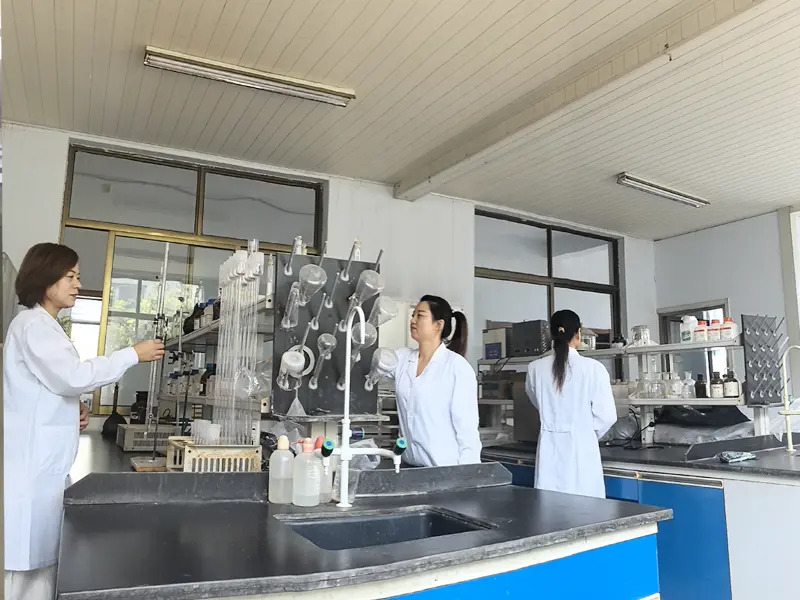
Two dyes can produce the same shade on a colour chip and behave nothing alike in a drum with a tight, unevenly tanned hide. The table below compares how the main classes used on leather tend to fail, because that is what determines whether a defect is easy to correct or a write-off.
| Dye class | Penetration on tight grain | Levelling / ease of correction | Bronzing risk | Lightfastness trend | Typical fit |
|---|---|---|---|---|---|
| 1:1 metal-complex acid | Moderate — needs float and temperature help | Good; shade can be pulled back with acid | Low to moderate | Good to very good | Automotive and upholstery; dark shades with a lightfastness spec |
| Milling acid | Good — migrates during the ramp | Very good; the most forgiving in the drum | Moderate if over-offered | Moderate | Garment, softy, glove; evenness over depth |
| Direct | Good on vegetable-tanned and retanned stock | Good; sensitive to electrolyte | Low | Moderate | Lining, split, suede; cost-driven volume |
| Basic / cationic | Poor on tight grain without aids | Poor once applied; hard to correct | High on deep shades | Poor | Bright fashion shades on pre-treated stock only |
| Reactive | Good, with controlled alkalinity | Moderate; fast fixation, less forgiving | Very low | Good | Wet-fastness-critical and washable garment leather |
Read that table as a risk map. If mottling dominates your defect history, milling acid dyes give you more room to correct. If bronzing on blacks dominates, the answer is usually a metal-complex dye plus a lower offer — not a different class at the same concentration, which simply bronzes in a different way.
How to Choose the Right Fix
Run a small trial that makes the defect happen again. If you cannot reproduce it you do not know the cause, and any fix is a guess that costs a bulk lot to disprove.
Check tannage, retannage, thickness and grain tightness of the actual stock in the drum. A recipe validated on chrome-tanned calf does not transfer to a vegetable-tanned or chrome-free wet-white article without re-checking penetration.
Float, starting temperature, pH, electrolyte, mechanical action, dye offer — one at a time. Slow for one batch, fast for the next twenty: you end up with a sheet that says why each number is what it is.
A fix that works from one lot may be luck. Run the same recipe on a second lot. If the shade holds without a strength adjustment, the fix is real. If it needs a 3–5% adjustment, lot variation is the real problem, not the process.
Seal a physical standard per shade in the finish state the customer sees, stored dark and dry. Write the recipe sheet with the parameters that mattered — including the ones that "never change", because those quietly do.
Quality-Control Evidence Worth Asking For
Most dye defects are caught or missed at the sample stage. The evidence that predicts bulk performance is narrow and specific:
- Lot-specific certificate of analysis — not a generic datasheet. Strength, moisture, insolubles, and the method used.
- A retained physical standard — dyed substrate, not a paper card. Paper and leather never agree.
- Repeat lab dip from a different lot, difference stated numerically where a spectrophotometer exists, or as a documented visual assessment under a named light source.
- Penetration evidence on a cross-section wherever the core will be visible — split, suede, edge-exposed construction.
- Fastness data with the standard and year cited, so the number still means something when your customer's lab tests it.
What we would not accept: "meets all international standards", a fastness figure with no method attached, or a sample with no identified lot behind it. None of those can be checked — which is why they get offered.
Packaging, Storage and the Defects That Start in the Warehouse
Some spotting complaints never touch a drum problem. Dye powder that absorbed moisture cakes, dissolves incompletely, and lands on the hide as grit or dark specks. The cause is storage, not chemistry — and it is preventable.
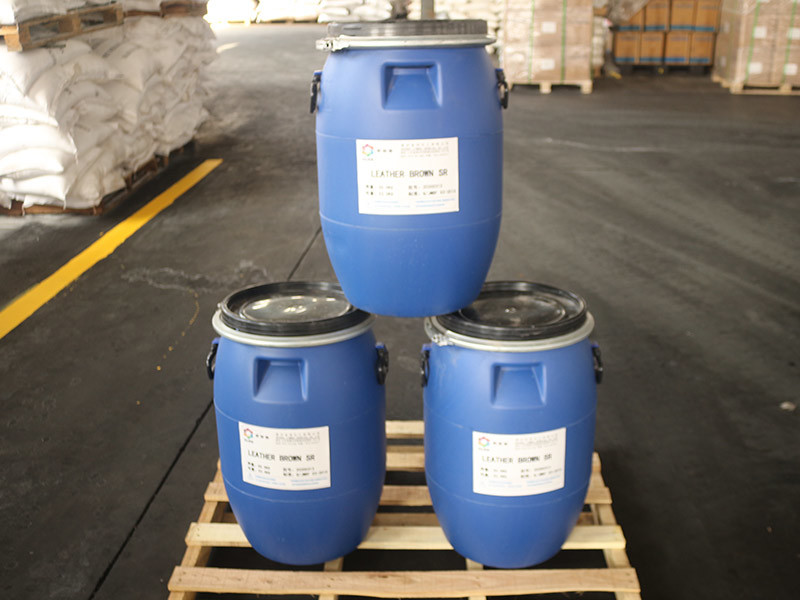
- Keep drums sealed and off a concrete floor; moisture migrates through the base.
- Store below the temperature where the dye class cakes — ask your supplier for the figure rather than assuming.
- Reseal part-used drums properly; a folded liner is not a seal.
- Apply FIFO by lot and record the lot on the batch card, so a defect traces to a drum and not to a year.
Five Buyer Mistakes
- Buying a dye to fix a process problem. Switching supplier is the most expensive way to change a float ratio. Diagnose first.
- Approving a shade on a paper card or a small swatch. Same dye, different substrate, thickness or tannage — different result. Approve on production-representative stock.
- Specifying fastness without a method. "Grade 4" means nothing without the standard, the conditions and who ran it.
- Ignoring lot-to-lot strength variation. If your sheet says 3.0% and never gets adjusted, you are absorbing the supplier's variation into your shade consistency.
- Two standards in one supply chain. One sealed physical standard, agreed in writing, in the finish state — otherwise every complaint becomes a negotiation about lighting.
Buyer Checklist
Before you release a bulk dye order
FAQ
Why does the shade look right in the drum but patchy after drying?
Migration during drying. As water leaves the hide, dye moves with it toward the surface and concentrates where evaporation is fastest — often over grain features and edges. Slower, more even drying and adequate fixation reduce it. If patchiness appears only after drying, look at the dryer before the dye.
Is a grey core always a penetration problem?
Almost always, but the cause can sit upstream of the dye. Insufficient retannage, a tight grain or a poorly soaked hide can all block penetration even with a correct bath. Check the substrate before increasing dye or extending time.
Can bronzing be removed after the fact?
Sometimes, by re-wetting and re-fixing or by adjusting the finish system. It is far cheaper to prevent it — lower the surface dye concentration. Treat post-hoc correction as recovery, not a process step.
Do metal-complex dyes bronze less than acid dyes?
Generally yes at equivalent depth, because they build more evenly and fix more completely. But bronzing is driven mainly by surface concentration and fixation, so a well-run acid bath beats a badly run metal-complex one.
How many dye lots should I test before a bulk order?
Two, minimum, from different production lots. One tells you the dye works; two tell you whether it works consistently. For a shade you will run all season, a third mid-season is cheap insurance.
What causes dark specks that only appear after finishing?
Undissolved dye or drum residue trapped under the finish, sometimes hard-water salts. Dissolve in hot water and strain, use a sequestrant on hard water, and verify clean-out between shades — especially dark to light.
Does a defect-free lab dip guarantee a defect-free bulk run?
No. It proves the chemistry can work. The bulk run adds load size, water quality, operator timing and dryer behaviour — which is why the recipe sheet and sealed standard matter as much as the sample.
Conclusion
Dye defects are expensive because they are discovered late. The leverage is all at the front end: reproduce the fault deliberately, change one parameter at a time, prove the fix on a second lot, and lock the standard in a form both dyehouse and buyer can point at. Do that, and most "dye complaints" never leave the lab.
Working through a shade problem now? Send the substrate, tannage, process and photographs of the defect under your light source. Our technical team in Dezhou can usually say within a day whether it is a dye selection, bath chemistry or drying issue — and what to test next.
Send us your defect sample
GLIDE™ dyes — leather, textile and paper dye systems from Dezhou Jinmao Chemical Co., Ltd. Tell us the substrate and the symptom; we will tell you what to check first.
Request a technical review