Acid Dyes vs Direct Dyes: Which One Fits Your Production Line?
Two dye classes, both anionic, both sitting on the same supplier price list — and yet putting the wrong one in the drum can cost you a re-dye, a rejected lot, or a fastness claim you cannot defend. Most buyers decide between acid and direct dyes on substrate alone: wool, nylon and leather get acid; cotton, viscose and paper get direct. That rule of thumb is a starting point, not a decision. Your production line narrows the choice much further: the pH your process can actually hold, the temperature your equipment reaches, whether you run exhaust or continuous, the salt load your effluent plant tolerates, and the fastness your customer really tests. This guide walks through those production variables and helps you pick the class that fits your line — before you commit to a bulk order.
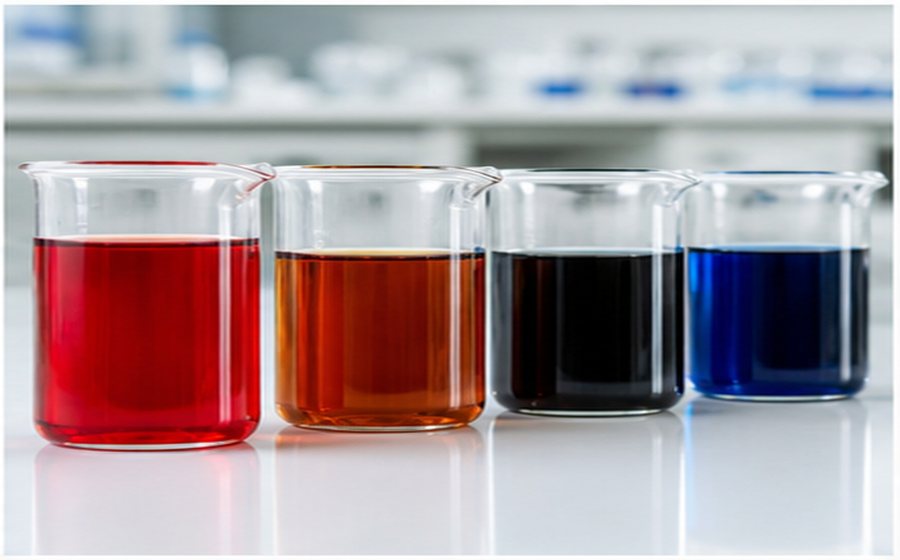
Acid dye powders — the workhorse class for wool, nylon and chrome-tanned leather.
Key Takeaways
- Both classes are anionic, but they dislike different substrates. Acid dyes bond to protein and polyamide fibres; direct dyes have affinity for cellulose. They are not interchangeable, even when the shade matches.
- Your process narrows the choice as much as your fibre does. pH window, dyeing temperature, electrolyte demand and fixation method decide whether a class will even work in your equipment.
- Acid dyes usually win on wet fastness for wool, nylon and leather. Direct dyes are the economical workhorse for cellulose and paper, but commonly need a fixing or after-treatment step.
- Insist on a lab dip on your own substrate, under your own process conditions. A generic spec sheet tells you the dye exists; a lab dip tells you how it behaves in your drum.
- Compare cost per finished batch, not price per kilogram. Dye, auxiliaries, salt, energy and re-dye risk all move the real number.
Acid Dyes vs Direct Dyes: What Actually Separates Them?
On paper the two classes look like siblings. Both are anionic — their coloured part carries a negative charge — and both are applied from water in a dye bath or drum. That similarity is exactly why buyers confuse them. The difference lies in how each one attaches to a fibre, and that chemistry dictates everything about how you run them.
Acid dyes are built to bond with positively charged sites. Protein fibres such as wool, silk and leather, and synthetic polyamide fibres such as nylon, develop those positive sites in an acidic bath. When you drop the pH with formic or acetic acid, the fibre turns cationic and the anionic dye migrates onto it, forming an ionic bond that resists washing. That is why acid dyeing is a marriage of a low pH and a controlled rise in temperature: the acid opens the door, the heat drives the dye in.
Direct dyes are designed for cellulose — cotton, viscose, linen, and the cellulose fibres in paper stock. Cellulose carries little positive charge, so there is no ionic doorway to walk through. Instead, direct dyes attach through weaker forces: hydrogen bonding and van der Waals attraction, helped along by adding electrolyte (common salt or Glauber's salt) to reduce the electrostatic repulsion between dye and fibre. Because those bonds are weaker, direct-dyed goods often need a cationic fixing agent or a post-treatment to hold up to washing.
The practical consequence: if you try to dye nylon or chrome-tanned leather with a direct dye, you fight poor exhaustion and weak fastness. If you try to dye cotton with a classic acid dye, you get almost no uptake at all. Substrate comes first — but it is only half of the decision. The other half is your line.
Technical Specifications
The table below summarises the parameters that most often decide process fit. Treat the values as typical working ranges for each class, not as fixed rules — your exact grade and substrate will shift them, which is why GLIDE™ grades ship with a grade-specific technical data sheet and a confirmed lab dip on request.
| Parameter | Acid Dyes | Direct Dyes |
|---|---|---|
| Charge / class | Anionic | Anionic |
| Primary substrates | Wool, silk, nylon, chrome-tanned leather, fur | Cotton, viscose, linen, paper/board, non-chrome where applicable |
| Typical bath pH | Acidic (roughly pH 2–6, grade and substrate dependent) | Neutral to mildly alkaline (roughly pH 6–9) |
| Electrolyte demand | Low — acid drives exhaustion instead of salt | High — salt is essential to exhaust onto cellulose |
| Typical dyeing temperature | Elevated (near boil for wool/nylon; warm for leather) | Warm to near boil, substrate dependent |
| Fixation / after-treatment | Acid fixation; metal-complex variants available for higher fastness | Often needs a cationic fixing agent or after-treatment |
| Wet fastness (typical) | Good to excellent on wool, nylon and leather | Moderate; improved with fixing |
| Effluent profile | Acidic bath; moderate salt | High salt/electrolyte load — check your treatment capacity |
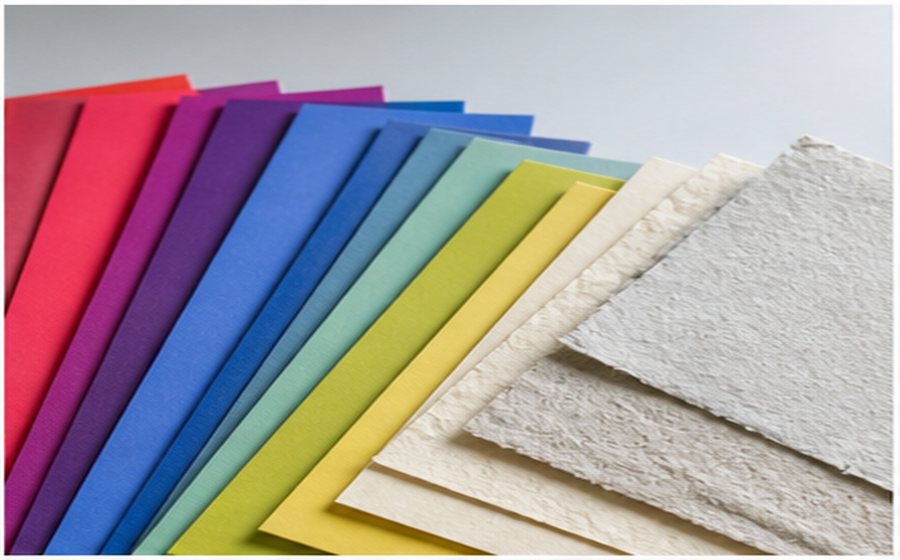
Direct dye powders — economical for cellulose and paper, usually with a fixing step.
Comparison of Options: Which Class Fits Which Line?
Match your production setup against the two classes. This is the version of the decision that the substrate-only rule of thumb misses.
| Production scenario | Better starting class | Why |
|---|---|---|
| Drum / exhaust dyeing of chrome-tanned leather | Acid dyes | Anionic dye bonds to the cationic chrome-leather complex; strong penetration and fastness |
| Wool, silk or nylon exhaust at the boil | Acid dyes (metal-complex for higher fastness) | Ionic bonding gives deep shades and durable wet fastness |
| Cotton or viscose exhaust | Direct dyes | Cellulose affinity via salt-assisted exhaustion; acid dyes barely fix |
| Paper, board and tissue wet-end | Direct dyes | Designed for cellulose stock; shade applied in the pulp |
| Line with limited salt capacity or tight effluent limits | Acid dyes (where substrate allows) | Lower electrolyte demand reduces effluent load |
| Line that cannot hold a low, stable pH | Direct dyes (where substrate allows) | Direct dyeing tolerates neutral to mildly alkaline baths |
| Shade-critical, fastness-critical order on wool/nylon | Acid dyes | Best balance of shade build-up and fastness for protein/polyamide |
How to Choose the Right Option: A Five-Step Process
- Start from the substrate, then go deeper. Identify the fibre chemistry — protein, polyamide, cellulose, or a blend. This eliminates the wrong class immediately. But do not stop there; the next four steps filter what remains.
- Map your process window. Write down the pH your bath can hold, the maximum temperature your equipment reaches, and whether you exhaust, pad or run continuous. A dye that needs a boil is useless in a warm-drum-only plant; a dye that needs salt is a problem on a line with limited effluent capacity.
- Check electrolyte and effluent reality. Direct dyeing leans heavily on salt. If your effluent plant, water usage targets or discharge limits are tight, price that in — and confirm whether an acid dye works on your substrate instead.
- Decide the fastness target, then the fixation route. Grade your end use (wash, rub, light, perspiration). Direct dyes on cellulose often need a fixing step; acid dyes on wool and nylon usually build fastness more directly, with metal-complex grades available when the bar is high.
- Run a lab dip on your own material, under your own conditions. Give your supplier a sample of your actual substrate, the shade target and your process parameters. Compare exhaustion, shade build-up, penetration and fastness before you order drums — not after.
Quality-Control Evidence to Demand
Whichever class you choose, the paperwork should prove that the drum in front of you behaves like the sample you approved. No honest supplier can promise identical results across every substrate, so the correct move is to ask for evidence tied to your order and your material. Ask for:
- A batch-numbered Certificate of Analysis (COA) for the specific lot shipped — strength, shade and moisture, matched to your order reference.
- A lab dip report on your own substrate, documenting the pH, temperature and auxiliaries used, plus a visual shade assessment against your target.
- Fastness test results on the relevant property for your end use — typically light, wash and rub under recognised ISO 105 methods — so you can compare like for like against your own lab.
- A current technical data sheet stating the recommended pH range, temperature range, electrolyte/auxiliary guidance and fastness profile for that grade.
- Retention samples from the shipped batch, held so both parties can re-test if a dispute arises after delivery.
If a supplier cannot produce a batch-linked COA or a lab dip on your material, treat the offer as unproven — regardless of how good the price looks.
Packaging & Shipping Notes
Dye powders are sensitive to moisture and heat, and they move under a chemical HS heading that requires proper documentation. Standard export practice for GLIDE™ dyes:
- Packaging: 25 kg net drums or multi-wall paper bags with a moisture-barrier inner liner, sealed to keep out humidity during sea transit.
- Palletising: shrink-wrapped and strapped pallets sized for standard containers, with ISPM 15-marked timber where wooden pallets are used.
- Documentation: commercial invoice, packing list, and a Safety Data Sheet (SDS) in the required format, with the correct HS classification for the dye class and grade.
- Sea freight moisture control: for long routes, specify desiccant and barrier liners so the powder does not cake in transit.
- Incoterms: agree FOB, CIF or another term up front — and match it to who arranges the dangerous-goods declaration, if your grade requires one.
Common Buyer Mistakes
Pre-Order Buyer Checklist
FAQ
Can acid dyes and direct dyes be used interchangeably?
No. Both are anionic, but acid dyes bond to protein and polyamide fibres while direct dyes have affinity for cellulose. Using the wrong class gives poor exhaustion, weak shade build-up and unreliable fastness.
Why do direct dyes need salt but acid dyes usually do not?
Cellulose has little positive charge, so electrolyte is added to reduce the repulsion between the anionic dye and the fibre and allow exhaustion. Acid dyeing instead uses a low pH to create positive sites on the fibre, which drives the dye on without a heavy salt addition.
Which class is better for chrome-tanned leather?
Anionic dyes — typically acid dyes — bond well to the cationic surface of chrome-tanned leather and give good penetration and fastness. Direct dyes can work in some leather finishes, but the choice depends on the finish and the equipment, and should be settled with a lab dip.
Do direct dyes always need a fixing agent?
Not always, but often for cellulose goods that will be washed repeatedly. A cationic fixing agent or after-treatment improves wet fastness. Confirm the requirement for your specific substrate and fastness target.
Can I run acid dyes on cotton or direct dyes on nylon?
Generally no, as a primary class. Acid dyes have little affinity for cellulose, and direct dyes give weak, dull results on nylon compared with acid dyes. If you have a blend, ask your supplier for a lab dip on the actual blend under your process conditions.
How much does a lab dip cost, and how long does it take?
It depends on the substrate and the shade, and honest suppliers will tell you directly rather than quoting a fixed figure. What matters is that the dip is run on your material under your process parameters — that is the evidence that de-risks a bulk order.
Which class gives better lightfastness?
It varies far more by specific grade than by class. Within both acid and direct families there are grades engineered for higher lightfastness. State your lightfastness target and request a grade matched to it, backed by test results on your substrate.
Conclusion
Acid dyes and direct dyes both come from the same anionic family, but the right choice is not settled by the fibre alone. It is settled where the fibre meets your production line: the pH you can hold, the temperature you can reach, the salt your effluent plant accepts, the fixing step you can run, and the fastness your customer will test. Get those five variables on paper, request a lab dip on your own material, and demand a batch-linked COA with your order. Do that and the class decision stops being a gamble and becomes a specification.
GLIDE™ dyes from Dezhou Jinmao Chemical Co., Ltd. cover both acid and direct families, with grade-specific technical data sheets and lab dips run on your substrate on request. Send us your fibre, your shade target and your process parameters — and we will tell you honestly which class fits, and why.
Not sure which dye class fits your line?
Send your substrate and process parameters — we will run a lab dip and recommend the right GLIDE™ grade.
Email: info@dyespro.com
Factory: +86 138 6922 6336 | WhatsApp: +44 7895 584241
Dezhou Jinmao Chemical Co., Ltd.
Manufacturer of GLIDE™ acid, direct, leather, textile, paper, wood and aluminium dyes.
Factory: +86 138 6922 6336
WhatsApp: +44 7895 584241
Email: info@dyespro.com
Web: www.dyespro.com