Sourcing Leather Chemicals from China: How to Vet a Dye Supplier Before You Commit
Send the same inquiry to ten Chinese dye suppliers and you will get back ten near-identical PDFs — same dye classes, same shade range, same promise of "stable quality and competitive price." The catalogues tell you almost nothing. What separates a supplier who can hold your shade across twenty drums from one who cannot is invisible until you are three containers in and your tannery is rejecting lots. Leather chemical procurement is a capability verification exercise, not a price comparison. This guide covers the entity checks, document requests, lab dip protocol, payment structures and packaging standards that let you judge a supplier on evidence instead of adjectives.
Key Takeaways
- Whether your supplier manufactures or resells determines who actually controls the batch recipe — establish this in writing before pricing means anything.
- Demand a batch-numbered Certificate of Analysis plus a sealed retention sample for every lot. A generic spec sheet is not traceability.
- Approve shades on lab dips run against your leather, not on the supplier's printed swatch card.
- For a first order, milestone-based payment (deposit against documents, balance against inspection) is reasonable; 100% upfront payment is not.
- ZDHC conformance, REACH/SVHC statements and SDS files should be verifiable documents with reference numbers — not badges used as decoration.
What Does Leather Chemical Procurement Actually Cover?
At a tannery, "leather chemicals" spans the whole wet-end and finishing chain: dyestuffs, fatliquors, retanning agents, tanning auxiliaries, binders, waxes and lacquers. Procurement managers rarely buy these from one place, because suppliers specialise differently. A dye manufacturer that compounds its own powder — controlling milling, standardising strength and shade, and testing fastness — is a different animal from a trader that buys finished powder from two or three plants and re-labels it.
Both exist in China, and both can serve you. The problem is that traders often present themselves as factories, so you negotiate on assumptions that later turn out to be false: assumed control over shade matching, assumed batch traceability, assumed consistency between the sample you approved and the drum you receive. The rest of this guide closes that gap before money moves.
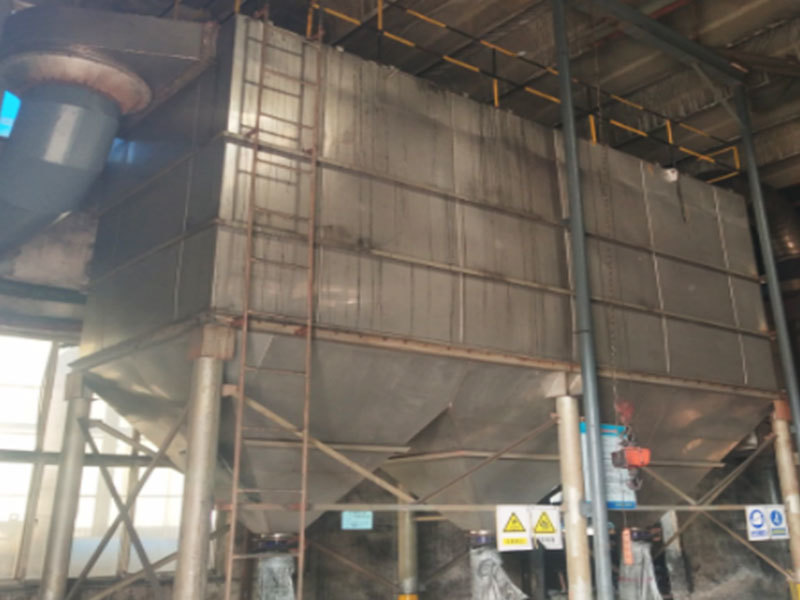
Dye compounding and milling capacity — one of the first things to verify (photos or a live video walkthrough) when qualifying a Chinese supplier.
Technical Specifications: What to Verify
Treat supplier qualification like a specification sheet you fill in yourself. The table below lists the verifiable parameters that actually predict whether a bulk order will behave.
| Parameter | What to ask for | Why it matters |
|---|---|---|
| Legal entity & site | Business license (unified social credit code), registered address vs. production address, factory photos or live video call | Confirms manufacturer status and gives you a legal counterparty if a claim arises |
| Product scope | List of dye classes actually compounded in-house (acid, direct, basic, leather-specific) | Prevents being quoted on a class the supplier merely resells |
| Batch size & MOQ | Standard production batch weight; minimum order per shade and per class | Reveals whether small trial orders are genuinely feasible or will be sourced spot-market |
| QC laboratory | Spectrophotometer (CIELAB shade measurement), fastness testers, moisture and insolubles testing | A lab that measures shade numerically can hold tolerances; one that eyeballs cannot |
| Documentation | Batch-numbered COA, SDS (GHS format), retention sample policy | The core of any downstream dispute — without these, a bad lot is unprovable |
| Compliance | ZDHC Gateway listing, REACH/SVHC statement, restricted-substance testing reports | Determines whether your finished leather can enter EU and US markets |
| Lead time | Stock shades vs. made-to-order; typical production and dispatch time | Made-to-order shades carry longer, less predictable lead times than stock items |
Comparison of Options: Manufacturer, Trader, or Distributor
None of these three is automatically wrong. What matters is matching the source type to the job.
| Factor | Direct manufacturer | Trading company | Regional distributor |
|---|---|---|---|
| Unit price | Usually lowest | Marked up 5–15% | Highest, but includes local stock |
| Recipe & shade control | Direct | Indirect — depends on upstream plant | None |
| Batch traceability | Full, internal records | Partial, passed through | Partial |
| Custom shade development | Yes, with lab dips | Possible, slower feedback loop | Rarely |
| MOQ flexibility | Moderate to low | Often more flexible | Very flexible |
| Lead time | Production + export | Production + export | Days, from local stock |
| Best for | Bulk, repeat shades, spec-critical work | Mixed loads, small trials, hard-to-source classes | Urgent top-ups and spot shortages |
How to Choose the Right Option
- Screen the legal entity first. Request the business license and confirm the registered scope covers chemical production. Compare the registered address with the address on a live factory video call. A supplier who resists a walkthrough is telling you something.
- Request the document set before samples. Ask for a specimen batch-numbered COA, an SDS in your required language, and any ZDHC or REACH statements. A supplier who cannot produce a redacted COA for a past lot will not produce a clean one for yours.
- Run lab dips on your own substrate. Send your crust or wet-blue plus a target shade reference, then evaluate the dip under your own light box — D65, TL84 and UV. Ask for the CIELAB delta values so the match is a number, not an opinion.
- Probe the QC chain. Ask how shade is standardised batch to batch, what delta-E tolerance is accepted, and whether retention samples are kept. Good suppliers answer immediately; vague ones redirect to "our quality is very stable."
- Lock the specification sheet, then negotiate terms. Write strength, shade reference, moisture, insolubles, fastness minimums and packaging into the order confirmation. Only then discuss price, MOQ and payment — otherwise you are comparing incomparable quotes.
Quality-Control Evidence: What to Demand
These documents separate a manageable supplier relationship from a gamble:
- Batch-numbered COA matching the drum label, stating strength, shade reference, moisture content, insolubles and fastness results where applicable.
- Sealed retention sample from the same lot, kept for an agreed period (typically 6–12 months) so a dispute can be physically tested.
- Safety Data Sheet in GHS format and in the language your customs broker and EHS team need.
- Third-party test reports from SGS, Intertek, BV or equivalent for restricted substances — worth requesting on the first order and periodically after.
- ZDHC Gateway listing if conformance is claimed; the listing should be searchable, not merely printed on a brochure.
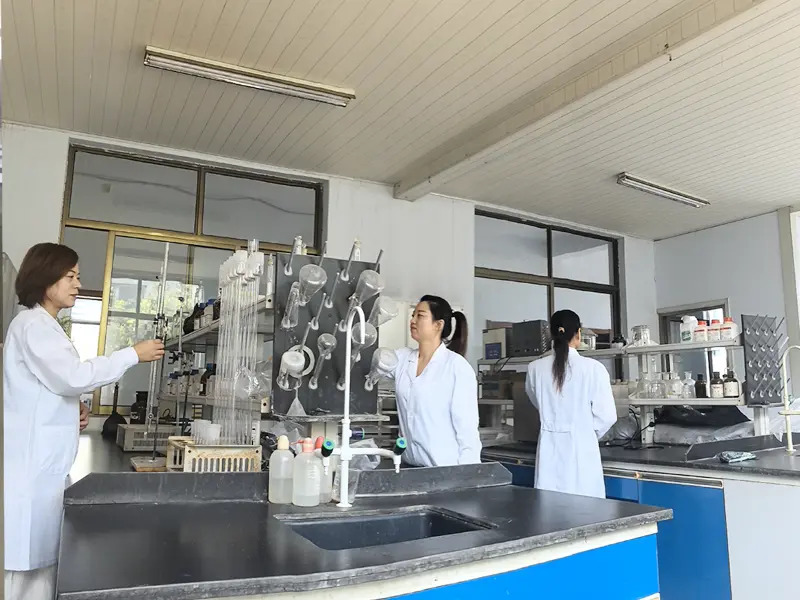
Ask what your supplier's QC lab measures — spectrophotometric shade control and fastness testing are the baseline, not a premium add-on.
Packaging & Shipping
For powdered leather dyes, the common export formats are 25 kg fibre drums or multi-wall paper bags with an internal PE liner, palletised and stretch-wrapped. Two checks prevent most container damage:
- Moisture protection. Powdered dye absorbs humidity in a sea container. Confirm the inner liner is intact and that drums are not shipped loose against a container wall without dunnage.
- Labelling and classification. Every drum should carry product name, batch number, net weight and production date. Confirm the HS heading (dyestuffs generally fall under HS 3204) and whether your product is classified as dangerous goods — this decides your documentation and freight cost.
On terms, FOB for a first order gives you control over the forwarder and lets you see the shipment before it sails; CIF is convenient once the relationship is proven. Whichever you choose, name an ISPM 15-compliant pallet standard in the order confirmation.
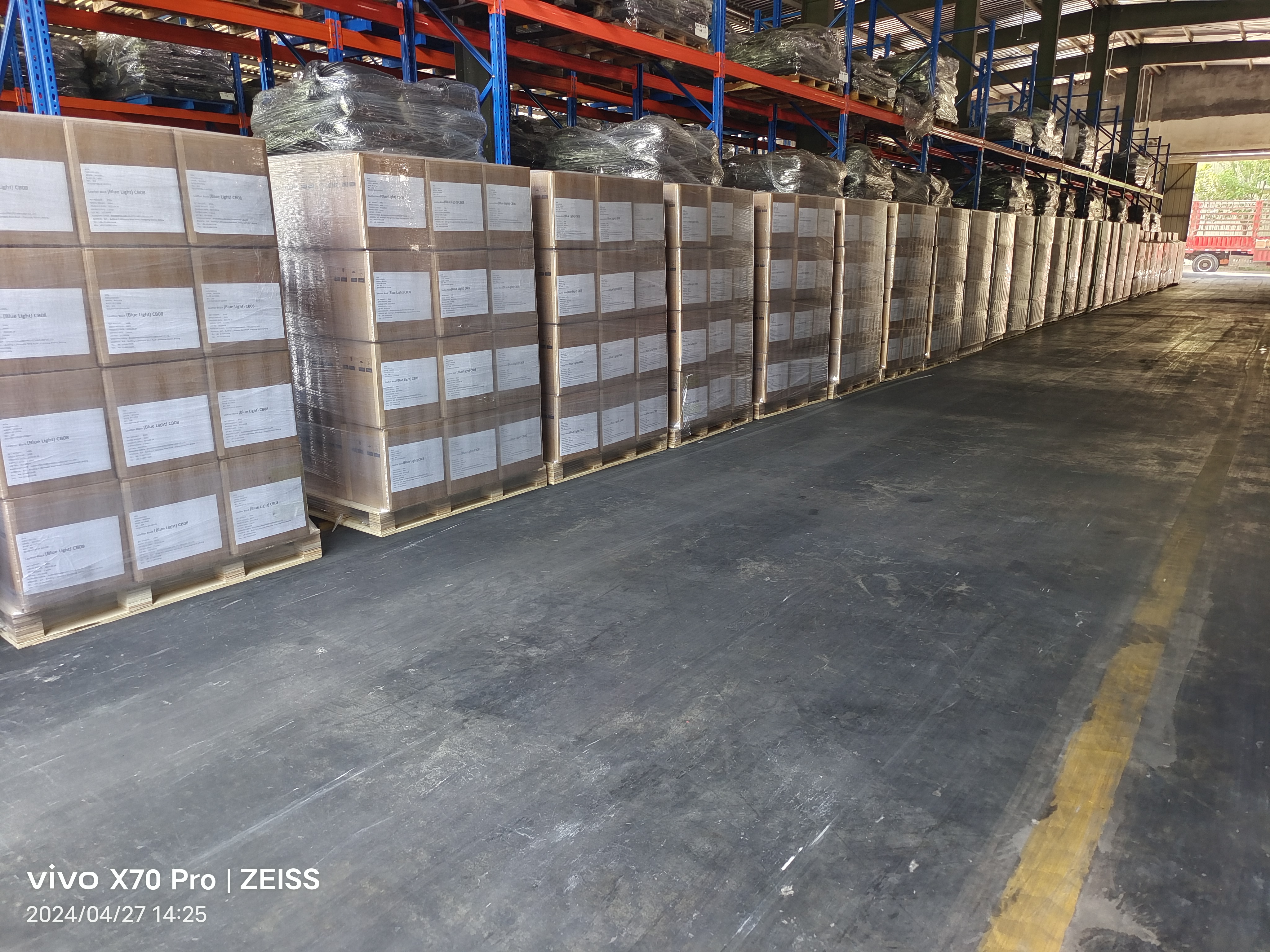
Labelled, palletised and lined: the packaging standard your order confirmation should specify in writing.
Common Buyer Mistakes
Buyer Checklist
Before you place a bulk order
FAQ
What is a typical MOQ for leather dyes from China?
For stock shades, many manufacturers work in the range of a few hundred kilograms per colour; custom shade development carries a higher minimum because it consumes a dedicated production batch. Minimums vary by dye class and capacity, so ask for the figure per shade rather than accepting a blanket number.
How do I confirm a Chinese dye supplier is a real manufacturer?
Ask for the business license, then compare the registered address to the site shown in a live video walkthrough. Request to see the milling and standardising equipment, and ask a technical question only a compounder can answer — for example, how batch strength is adjusted after milling. Traders deflect these; manufacturers answer them.
What documents should accompany every shipment?
At minimum: a batch-numbered COA, an SDS, a packing list showing drum counts and batch numbers, and the commercial invoice. If your market requires restricted-substance conformance, add the relevant ZDHC or third-party test documentation.
How long does a custom shade match take?
It depends on how far the target sits from the nearest existing shade and how quickly your substrate reaches the supplier's lab. Simple matches against an in-stock base turn around fast; genuinely new shades need several dip iterations. Agree the number of free dip rounds in advance and get the timeline in writing rather than a verbal estimate.
Is a trading company ever the better choice?
Yes, in specific situations: small mixed trial orders, hard-to-source classes, or when you need several dye families consolidated into one container. Just price it accordingly and confirm where the material is actually produced, because batch traceability is one step further removed.
What payment terms are normal for a first order?
A common structure is a deposit against the proforma invoice with the balance against shipping documents, sometimes with a pre-shipment inspection clause. Terms improve as the relationship proves out. Treat any demand for full prepayment on a first order with no inspection rights as a risk signal.
Do I need ZDHC conformance for leather dyes?
If your finished leather is destined for brands that mandate it — most large footwear and apparel groups do — you need to know your dyestuff inputs are MRSL-conformant. Ask for the supplier's ZDHC Gateway listing and confirm the product family is covered, not just the company name.
The Bottom Line
Vetting a Chinese dye supplier is the first step of a manufacturing relationship, not a one-off purchase. The suppliers worth keeping hand over documents before you ask, run lab dips on your leather, and answer technical questions with specifics. Price, MOQ and lead time all become negotiable once you know who you are actually dealing with.
Talk to the Factory, Not a Broker
Dezhou Jinmao Chemical Co., Ltd. compounds GLIDE™ dyes in-house — leather, acid, direct, textile, paper, fur and wood dye classes — with batch-numbered COAs and lab dips on customer substrates.
Send us your substrate and target shade, and we will return a dip and a written spec sheet.
Factory: +86 138 6922 6336 | WhatsApp: +44 7895 584241 | Email: info@dyespro.com
Dezhou Jinmao Chemical Co., Ltd.
Manufacturer of GLIDE™ dyestuffs — leather, textile, paper, fur, wood and aluminium dye applications.
Factory: +86 138 6922 6336 | WhatsApp: +44 7895 584241 | Email: info@dyespro.com
www.dyespro.com