Textile & Paper Dye Applications: Which Dye Class Belongs on Your Production Line?
Most of the buyers who contact us know GLIDE™ as a leather dye brand. But a large share of them run textile, fur, or paper lines as well — and they usually discover the hard way that the dye classes do not carry over. An acid dye that performs beautifully on leather will not hold on cotton; a direct dye that colors paper well may bleed through a wet textile process. The cost of getting this wrong is not just an off-shade batch: it is rejected goods, rework, missed delivery dates, and a damaged relationship with your own customer. This guide maps the main dye classes to textile and paper substrates, compares their technical profiles, and walks through a five-step selection process, so you can source acid, direct, and basic dyes from one factory with confidence.
Key Takeaways
- One dye class does not fit all: acid dyes suit nylon, wool, silk and fur; direct dyes suit cotton, viscose and paper; basic dyes deliver bright paper shades.
- Textile dyeing is a fastness game; paper dyeing is a solubility and brightness game. Judge the dye by the property your end-use demands.
- Batch-to-batch shade consistency is the #1 procurement risk — demand batch-numbered COAs, retained samples, and an agreed tolerance.
- A lab dip on your actual substrate beats any datasheet. Water hardness, pH, and machine conditions all shift the final shade.
- Consolidating dye classes with one manufacturer simplifies QC, documentation, and freight — if that supplier is genuinely a manufacturer, not a trader.
What Is Textile & Paper Dyeing?
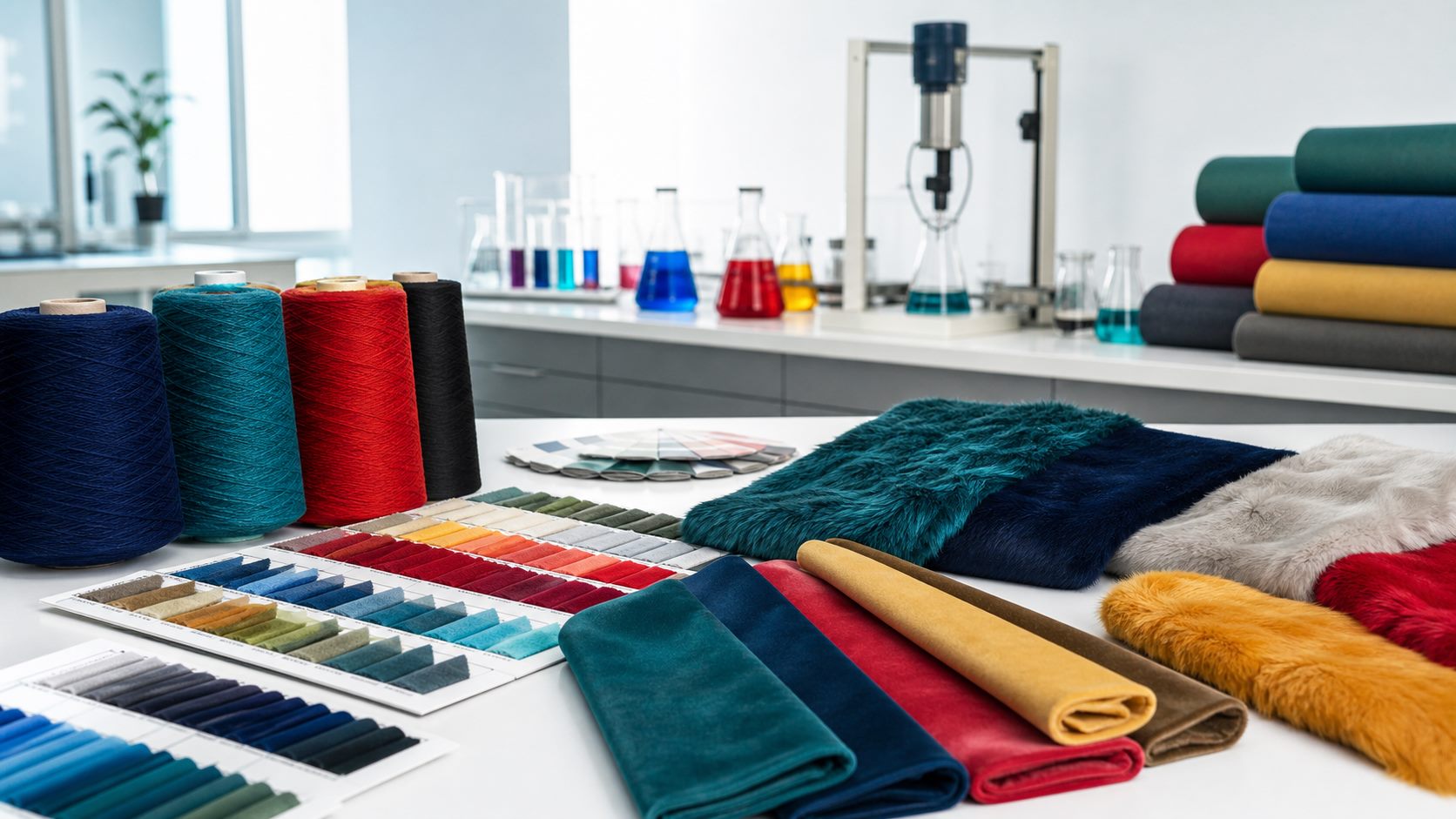
GLIDE™ dye classes are used across textile, fur, and paper lines, not only leather.
Textile dyeing colors fibers — natural or synthetic — so the shade survives washing, light, rubbing, and perspiration. The chemistry has to match the fiber's charge and structure: anionic acid dyes bind to the cationic amino groups of nylon, wool, and silk, while direct dyes adsorb onto cellulosic fibers like cotton and viscose without a mordant. Because the mechanism differs, so does the dye selection.
Paper dyeing works differently. Pulp and finished paper are colored mostly with direct and basic dyes. The priorities are high solubility in the stock preparation, low foaming, good retention on the fiber, and brightness at low addition levels. A paper dye that is slightly off in wet fastness may still pass — a textile dye that is slightly off will not.
The practical consequence for a buyer: "dye" is not one product category. It is several chemistries sold under one name, and each has a substrate where it belongs and one where it fails.
Technical Specifications at a Glance
The table below summarizes the main dye classes GLIDE™ supplies for textile and paper production. Use it as a first filter before requesting samples.
| Dye Class | Typical Substrates | Application pH | Key Properties | Main Fastness Concern |
|---|---|---|---|---|
| Acid dyes | Nylon, wool, silk, fur | 3–6 (with acid donor) | High solubility, bright shades, good leveling with proper auxiliaries | Wet fastness; improve with fixing agents |
| Direct dyes | Cotton, viscose, paper, leather | 6–9 (neutral to alkaline) | Simple application, good affinity for cellulose, economical | Washing fastness; needs after-treatment for heavy shades |
| Basic (cationic) dyes | Paper, acrylic fibers | 4–7 | Very high tinctorial strength, brilliant shades, low dosage | Lightfastness varies by shade |
Figures above are general application guidelines for typical industrial conditions. Exact pH, temperature, and auxiliary recommendations depend on your water and machine setup — confirm them with a lab dip rather than assuming the datasheet applies directly.
Comparison of Options: Which Dye Class, Where?
| Option | Best For | Levelness | Fastness Profile | Cost Position | Typical Pitfall |
|---|---|---|---|---|---|
| Acid dyes | Nylon carpets, wool garments, silk, fur garments | Good with leveling agents | Strong wet and light fastness after fixation | Mid-range | Shade drift on hard water or inconsistent pH |
| Direct dyes | Cotton yarn, denim, paper, tissue | Fair to good | Moderate; improves with fixing agent | Lower per kg | Bleeding in subsequent wet processing |
| Basic dyes | Colored paper, boards, acrylic | Good | Excellent strength; lightfastness shade-dependent | Low dosage per ton of pulp | Poor fastness on fibers it cannot bond to |
If your production runs several substrates, you will likely need more than one class. That is normal — the question is whether you want to manage two or three suppliers, or one manufacturer who can supply the whole set with consistent documentation.
How to Choose the Right Option: A 5-Step Process
- Name the substrate and the end-use. Write down exactly what you dye — nylon carpet yarn, cotton knit fabric, pulp for tissue — and what the final product must survive. This single step eliminates most wrong choices immediately.
- Lock the fastness targets to your market. Export customers usually reference ISO 105 (textiles) or ISO 11640 (leather) test methods. Know which standard your customer's lab will use, because pass/fail thresholds differ by market and season.
- Check process compatibility. Compare the dye's solubility, recommended pH range, and temperature tolerance against your water hardness, machine type, and current auxiliaries. A great dye in the wrong pH window is a bad dye on your floor.
- Run a lab dip on your actual substrate. Send the supplier your fabric or pulp sample, not a description of it. Approve the shade under the same light source your customer will use — daylight D65 is the usual reference.
- Scale with a trial lot and a batch-numbered COA. Order a trial quantity first, test it under production conditions, and keep a retained sample. Only then commit to bulk volume with the agreed shade tolerance written into the order.
Quality-Control Evidence: What You Can Verify
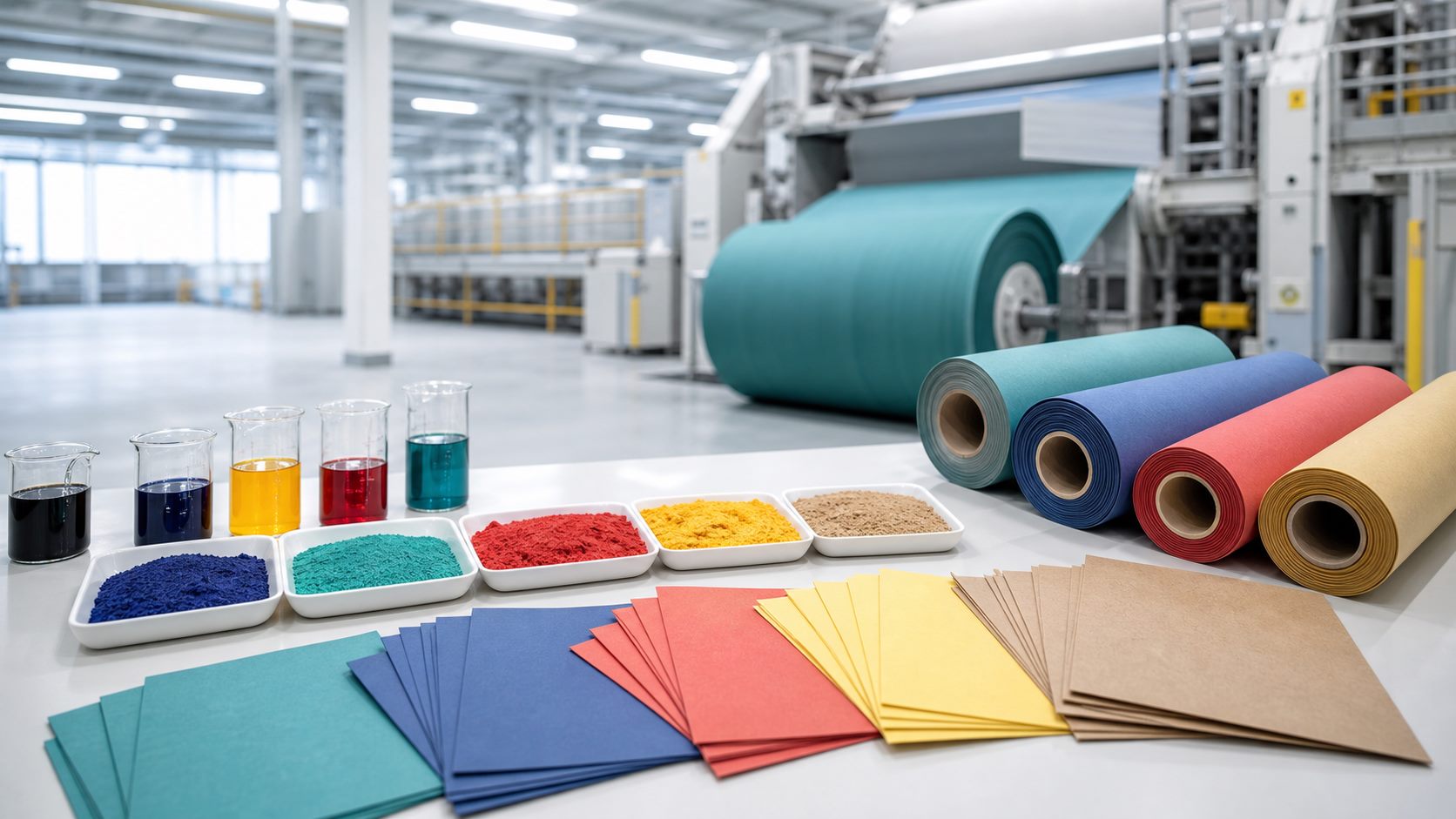
Paper dyeing prioritizes solubility, retention, and brightness over wet fastness.
We do not expect you to take a supplier's word for quality, and we do not ask you to take ours. Here is what you can actually check before and during an order with GLIDE™:
- Batch-numbered COA: every production batch ships with a certificate of analysis tied to its batch number, covering dye strength, shade against standard, moisture, and insolubles. The batch number lets you trace any complaint back to production records.
- In-house laboratory: our lab checks color strength and shade before release; spectrophotometer measurements are used to compare each batch against the retained standard.
- Retained samples: standards are kept in the lab so a batch produced this year can be compared with one produced last year.
- Lab dips before bulk: we produce trial dyeings on customer substrate before production, not after.
- ZDHC documentation: relevant GLIDE™ ranges carry ZDHC Level 3 conformance documents, which you can review on request for your compliance file.
Ask any supplier for these five items. A trader can rarely produce batch-numbered COAs or retained standards; a real manufacturer can.
Packaging & Shipping
Dye powder is sensitive to moisture, and clumped or caked dye is the most common complaint in transit. Standard practice at our Dezhou facility:
- Inner packaging: moisture-proof liner inside the drum or carton, sealed before the outer container is closed.
- Outer packaging: 25 kg drums or export cartons, palletized and stretch-wrapped; pallets follow ISPM 15 heat-treatment rules for international freight.
- Marking: product name, GLIDE™ brand, batch number, net weight, and handling marks on every unit so warehouse staff can identify and segregate lots.
- Documents: commercial invoice, packing list, batch-numbered COA, and MSDS travel with each shipment; export documentation is prepared for sea, air, or rail as agreed.
- Storage: keep drums sealed and off the floor in a dry warehouse; follow the storage temperature on the label.
Lead times and freight options depend on destination and order size — confirm both at quotation, and agree the Incoterm before production starts.
Common Buyer Mistakes
Buyer Checklist
Before you place your next textile or paper dye order
FAQ
Can I use leather dyes on textiles or paper?
Usually not. Leather dyeing is tuned to collagen and often to surface application; textile and paper need dyes with different solubility, pH behavior, and fastness profiles. Check the dye class against the substrate before trialing.
What is the difference between acid and direct dyes for cotton?
Acid dyes have little affinity for cotton and will wash out. Direct dyes bond to cellulose and are the standard economical choice for cotton and viscose, with a fixing after-treatment when wet fastness matters.
Why does paper dye need high solubility?
Paper dyes are added to the stock preparation where undissolved particles cause specks and uneven shade. High solubility and low foaming keep the addition clean and the shade uniform across the reel.
Which fastness tests apply to textile dyes?
ISO 105 series covers washing, light, rubbing, and perspiration fastness for textiles. Your customer's specification will name the specific methods and grades; confirm them before approving a shade standard.
Do you supply textile and paper dyes from the same factory?
Yes. GLIDE™ acid, direct, and basic dye ranges for textile, fur, and paper are produced by Dezhou Jinmao Chemical Co., Ltd., so you can consolidate sourcing, QC documentation, and freight with one manufacturer.
Can I order a small trial lot first?
Yes. Trial quantities with lab dips are the standard starting point. Ask our sales team for the current trial-lot terms and lead time for your destination.
How do I verify batch-to-batch consistency?
Request the batch-numbered COA for each lot and keep a retained sample from the approved lab dip. Compare each incoming batch against it; if a shade tolerance is written into your order, disputes are resolved against the retained standard.
Conclusion
Textile and paper dyeing are not extensions of leather dyeing — they are separate chemistries with separate priorities. The good news for a buyer is that the selection logic is the same everywhere: define the substrate and end-use, lock fastness targets to the market standard, verify process compatibility, approve a lab dip on real substrate, and scale with batch-numbered documentation. When you can source acid, direct, and basic dyes from one manufacturer that can show you the lab work, the COAs, and the retained standards, you simplify your supply chain instead of complicating it.
Talk to the GLIDE™ Team
Send us your substrate sample and target shade — we will confirm the dye class, run a lab dip, and quote trial and bulk quantities.
Factory: +86 138 6922 6336
WhatsApp: +44 7895 584241
Email: info@dyespro.com
Dezhou Jinmao Chemical Co., Ltd. — GLIDE™ Dyes
Factory: +86 138 6922 6336 | WhatsApp: +44 7895 584241 | Email: info@dyespro.com
© 2026 Dezhou Jinmao Chemical Co., Ltd. — www.dyespro.com