Dye Fastness Testing: The Quality Control Playbook for Bulk Dye Orders
Every dye buyer has a version of this story: the bulk shipment arrives, the powder looks identical to the sample, the lab confirms the shade — and then the first finished batch fails wash fastness at your customer's door. The rework, the claim, and the lost account are yours. Fastness is where dye quality problems surface, because it is invisible at the receiving dock. This guide covers what fastness testing covers, which standards your market expects, how to read a supplier's certificate of analysis (COA), and how to set up a receiving QC routine that catches a bad batch before it reaches your production line.
Key Takeaways
- A fastness spec means nothing without a standard, a test condition, and a grade — "wash fastness 4" is incomplete until you name the method and the substrate.
- ISO 105 is the reference framework for textiles; ISO 11640–11642 cover leather. Light, wash, and rub fastness decide most commercial orders.
- Fastness belongs to the dyed material, not the dye powder alone — the same dye can grade differently on different leathers, liquors, and aftertreatments.
- Batch-to-batch consistency is a separate QC problem: strength, shade, and insolubles drift between production runs unless the mill controls and documents each batch.
- A written QC protocol — pre-production samples, batch-numbered COA, retained samples, and arrival testing — protects you more than any supplier promise.
What Is Dye Fastness Testing?
Fastness testing measures how well a dyed material resists the conditions it will meet in use: light, washing, water, perspiration, rubbing, and solvents. Every test produces two numbers. The first is color change — how much the specimen fades or shifts. The second is staining — how much color transfers to adjacent undyed fabric or a rubbing cloth. Both are rated on a grey scale from 1 (severe) to 5 (no change); commercial grades are usually quoted in half steps, such as 3–4.
Two points matter for a buyer. First, fastness is a property of the dye–substrate system: dye concentration, leather or fiber type, pH, temperature, and fixing agents all shift the result. The same acid dye can grade 4–5 on chrome-tanned leather and 3 on a poorly retanned split. Second, the standard defines the conditions — a dye can pass ISO 105-C06 at 40 °C and fail at 60 °C.
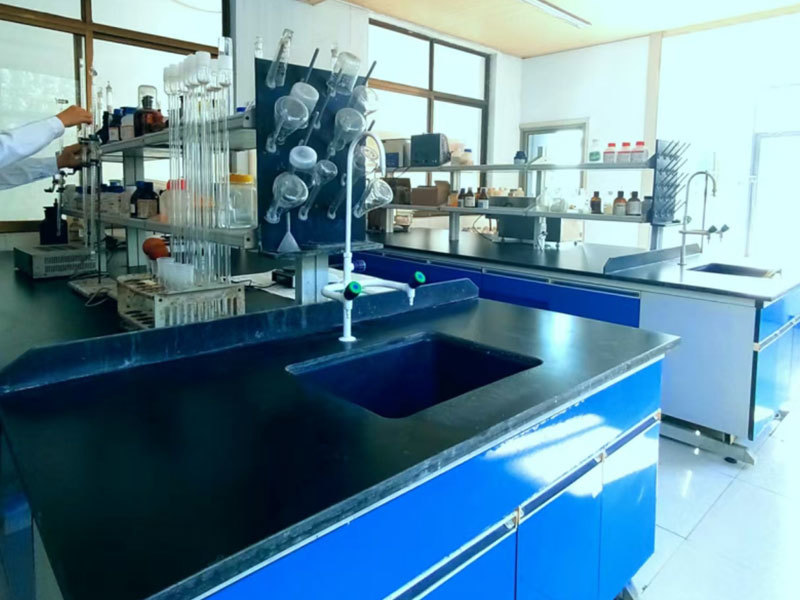
Fastness grades come from the lab, not the warehouse — the GLIDE™ QC laboratory.
Technical Specifications: The Core Fastness Tests
These are the tests you will see on most dye data sheets and COAs. Individual products differ, so treat the typical grades as orientation, not as a substitute for a product's own test report.
| Test | Common standard | What it measures | Typical commercial grade |
|---|---|---|---|
| Light fastness | ISO 105-B02 (xenon arc); AATCC 16.3 | Resistance to fading under light; important for automotive, upholstery, outdoor goods | 3–4 or higher for exposed articles |
| Wash fastness | ISO 105-C06; AATCC 61 | Color change and staining after laundering at defined temperature and time | 3–4 at the specified wash condition |
| Rub (crocking) fastness | ISO 105-X12 (textiles); ISO 11640 (leather, wet and dry) | Transfer of color to a rubbing cloth, dry and wet | Dry 3–4; wet 2–3 typical |
| Perspiration fastness | ISO 105-E04 | Resistance to acid and alkaline perspiration, with staining assessment | 3–4 |
| Water fastness | ISO 105-E01 (textiles); ISO 11642 (leather) | Behavior under water immersion or spotting | 3–4 |
| Assessment scales | ISO 105-A02 (color change); ISO 105-A03 (staining) | Grey scale rating from 1 to 5 used across all fastness tests | 1 (severe) to 5 (no change) |
Comparison of Options: How to Verify Fastness
You have three ways to get fastness evidence; serious buyers combine them.
| Option | What it covers | Cost and lead time | Best used when |
|---|---|---|---|
| Supplier COA per batch | Batch number, strength, moisture, insolubles, and fastness data from the mill's own lab | No extra cost; arrives with documents | Every order — the baseline evidence, but verify the supplier's lab first |
| In-house receiving testing | Shade vs. master standard plus one or two critical fastness tests on the actual substrate | Lab time and consumables; results in 1–3 days | First batch of every new product, and spot checks on repeat orders |
| Third-party laboratory | Independent fastness and chemical testing to named standards (e.g., SGS, Intertek, TÜV, Bureau Veritas) | Per-test fees; results in days to weeks | Customer-mandated reports and dispute resolution |
The mistake is treating these as alternatives. The reliable pattern is trust but verify: COA on every batch, in-house confirmation on the first batch, third-party reports for customer-mandated or disputed orders.
How to Set Up QC for a Bulk Dye Order: 5 Steps
You do not need a full testing laboratory to protect a bulk dye order. You need a written protocol and the discipline to follow it.
- Define your fastness specs in writing before ordering. Name the property, the standard, the test condition, and the minimum grade — for example "rub fastness to ISO 11640, dry, minimum 3–4." Send this with your inquiry, not after the order.
- Qualify the supplier with a pre-production sample pack. Request 1–2 kg of the actual product code with a full COA, a shade card or lab dip, and any third-party test report. An undated generic COA is a red flag.
- Agree batch acceptance criteria. State what each delivered batch must show: strength within an agreed tolerance of the standard, shade match against the approved master sample, and a COA tied to the drum or lot markings.
- Run arrival testing on the first batch. Check shade against the master sample and run at least one critical fastness test on your own substrate. This catches a supplier who changed raw materials between sample and bulk.
- Keep retained samples and document everything. Hold a sealed sample from every batch — yours and the supplier's — for at least the warranty period, so a later claim is judged on evidence, not memory.
Quality-Control Evidence: What to Ask For and How to Read It
Fastness claims are only as good as the documents behind them.
- COA per batch: names the product, batch/lot number, production date, strength, moisture, insolubles, and fastness results with the standards used. The batch number on the COA must match the labels on your drums.
- Third-party reports: state the laboratory, the standard and condition, and grey-scale grades for both color change and staining. Check the date — a report from three years ago does not cover this year's production.
- Retained samples: a supplier that keeps reference samples of every batch is easier to work with in a dispute. Ask where and how long they retain them.
- Compliance documents: for regulated markets, pair fastness data with restricted-substance conformance such as a ZDHC MRSL declaration covering the exact product code. GLIDE™ dyes are produced under documented quality control and ZDHC conformance at the Dezhou Jinmao Chemical factory.
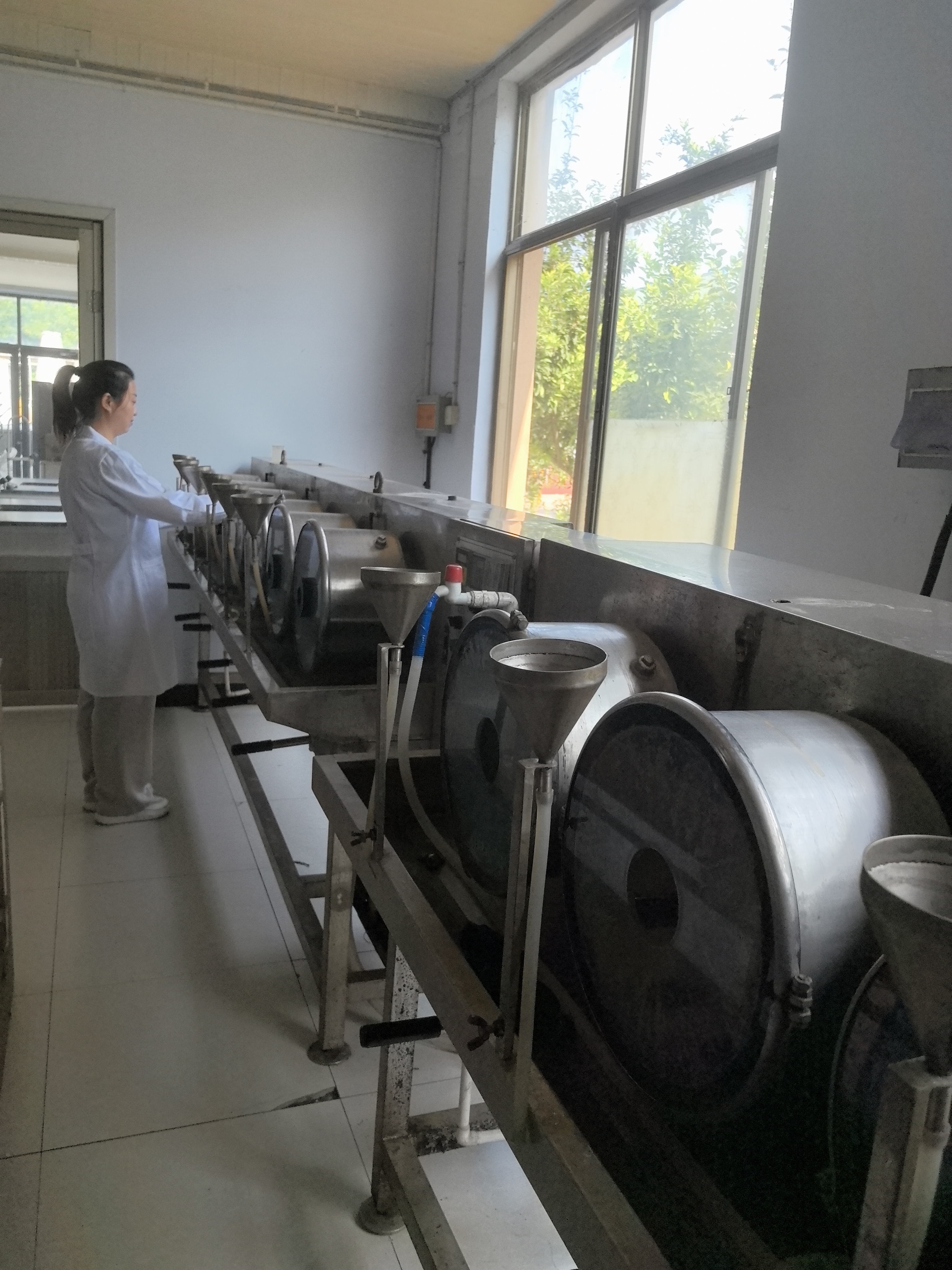
Every GLIDE™ batch is sampled and retained — traceability starts at the drum.
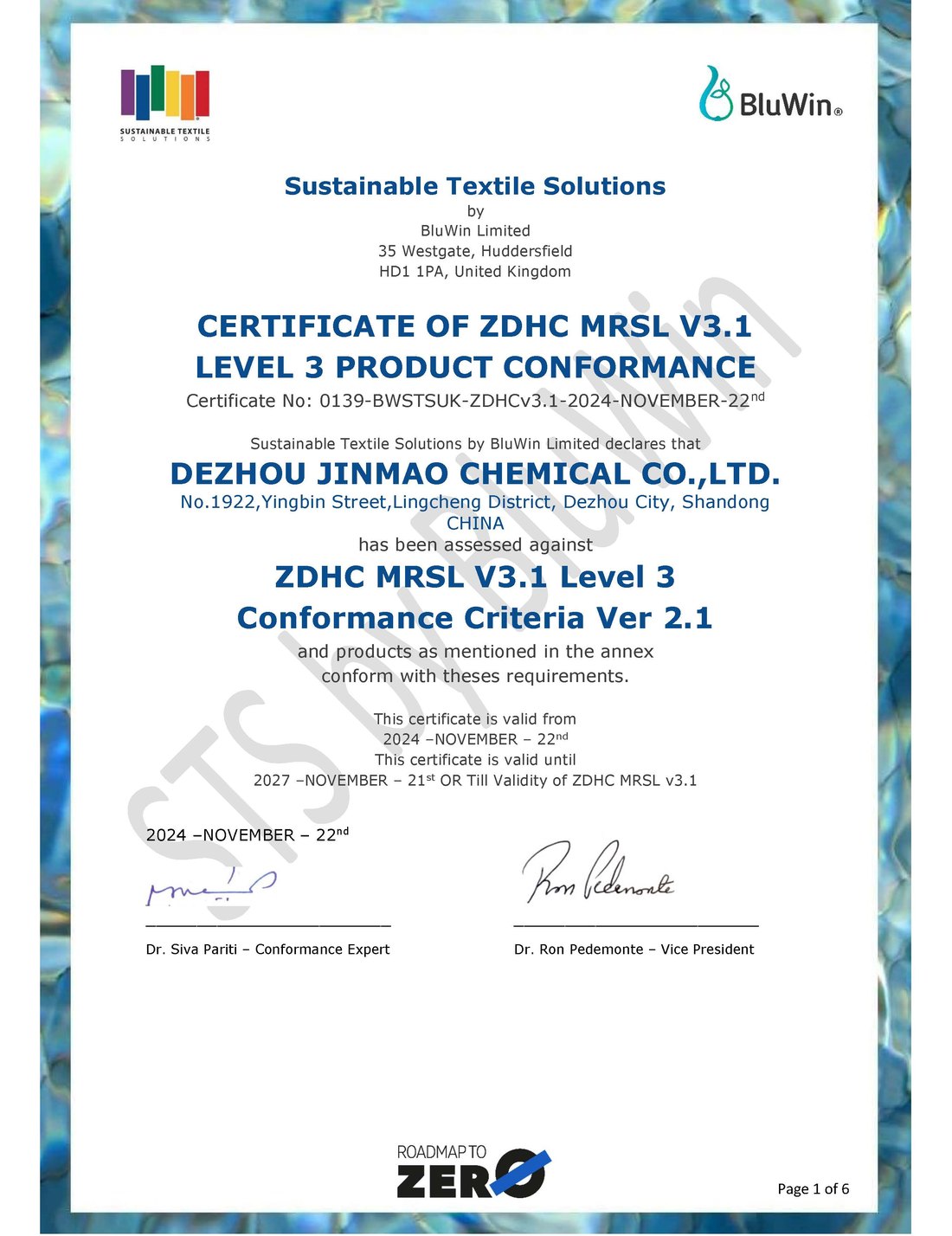
GLIDE™ dyes carry documented ZDHC conformance to support compliance-driven sourcing.
Packaging, Sampling, and Shipping Considerations
Dye powder is not indestructible — moisture is the main enemy, causing caking and, in some classes, changes in solubility and strength. Standard export packaging is 25 kg sealed bags or fiber drums with a polyethylene liner. Check drum condition before you sign the delivery note, and note damaged or wet drums immediately for the freight claim. Keep the COA with the batch records and store a sealed sample from each batch in a dry, cool place so any later failure can be traced to the right batch.
Common Buyer Mistakes
Buyer Checklist for Fastness and Quality Control
Before you order
At receiving
Frequently Asked Questions
What does a fastness grade like "3–4" actually mean?
Grades run 1 to 5 on the grey scale: 5 means no color change or staining, 1 means severe. "3–4" is the halfway step and a common commercial minimum for wash and rub fastness.
What is the difference between color change and staining?
Color change measures how much the dyed material itself fades or shifts. Staining measures how much dye transfers to adjacent undyed fabric or the rubbing cloth. Both are rated separately and both matter to your customer.
Do I need to test every batch?
Not every batch needs the full suite. A practical routine: full check on the first batch of a new product, then shade plus one critical fastness test on spot checks, with the COA as the per-batch baseline.
Can I rely on the supplier's COA alone?
Yes, if the COA is batch-numbered, dated, names the standards used, and comes from a supplier whose lab you have verified — no, if it is generic or undated. Independent testing is warranted when a customer mandates it or a dispute arises.
Which fastness tests matter most for leather? For textiles?
For leather, rub fastness (ISO 11640, wet and dry) and light fastness are usually decisive; for textiles, wash fastness (ISO 105-C06) and light fastness lead, with crocking for denim and dark shades.
What should I do if a batch fails arrival testing?
Stop the batch, seal the retained samples, and contact the supplier with the failing test report immediately. Acceptance criteria and a claim procedure agreed before shipment make this fast and fair — reputable mills will replace or credit a genuinely non-conforming batch.
Does GLIDE™ provide fastness documentation with bulk orders?
Yes. Every GLIDE™ order ships with a batch-numbered COA, and test reports and ZDHC conformance documents are available for the relevant product codes. The team also supplies pre-production samples so you can run your own confirmation before committing to volume.
Protect Your Next Bulk Order with GLIDE™ Dyes
Fastness problems are cheaper to prevent than to fix. GLIDE™ dyes from Dezhou Jinmao Chemical Co., Ltd. ship with batch-numbered COAs, retained samples, and ZDHC conformance to support your QC routine. Send us your fastness spec and substrate — we will shortlist the right products, supply samples, and stand behind every batch we ship.
Start with a free consultation and trial samples:
📧 info@dyespro.com | 📞 +86 138 6922 6336 | 💬 WhatsApp: +44 7895 584241
Dezhou Jinmao Chemical Co., Ltd. — Manufacturer of GLIDE™ dyes
Factory: Dezhou, Shandong Province, China
📞 Factory: +86 138 6922 6336 | 💬 WhatsApp: +44 7895 584241 | 📧 Email: info@dyespro.com
Website: www.dyespro.com