How to Select Leather Dyes for Different Leather Types: A Procurement Manager's Guide
You order 500 kg of acid black dye for full-grain aniline leather. The drum test looks fine. Three weeks later, your cutting-room crew flags uneven penetration on the belly splits, and the lightfastness score on the finished sofa leather falls two points below spec. The problem wasn't the dye — it was the match. Full-grain, corrected-grain, split, suede, and nubuck each demand different dye chemistries, particle sizes, and fixation behaviors. This guide breaks down how to pair GLIDE™ dyes to each leather type so you stop overpaying for the wrong formulation and stop fielding returns from unhappy cutting rooms.
Key Takeaways
- Leather type dictates dye chemistry. Full-grain aniline uses penetrating acid dyes; corrected-grain and pigmented finishes work with surface-level direct dyes.
- Penetration depth is the #1 spec to check — deeper isn't always better. Splits need less penetration than full-grain, and suede needs full-through coloration.
- Lightfastness and migration fastness are non-negotiable for automotive and furniture leather. Specify ISO 105-B02 (light) and ISO 15701 (migration) in your purchase order.
- Bulk buying without drum trials costs more than the trial itself. A 5 kg lab sample from a GLIDE™ partner can prevent a 500 kg mismatch.
- Chinese dye suppliers with ZDHC Level 3 certification simplify compliance paperwork for EU and US importers. Ask for the certificate before the proforma invoice.
What Is Leather Dye Selection?
Leather dye selection is the process of matching a specific dye chemistry — acid dye, direct dye, metal-complex dye, reactive dye, or sulfur dye — to the physical and chemical properties of a given leather substrate. The substrate varies by grain structure (full-grain vs. buffed/corrected), tannage (chrome vs. vegetable vs. synthetic), thickness, and end-use (footwear, upholstery, automotive, garment, or accessories).
A dye that performs beautifully on chrome-tanned full-grain cowhide can look patchy on vegetable-tanned goatskin. The difference comes down to three factors: isoelectric point of the leather (which determines dye uptake), pore structure (which controls penetration), and finish chemistry (which affects whether the dye sits on top or penetrates through).
For procurement managers, "selecting" a dye means specifying these parameters in a purchase order — dye type, concentration, pH range of application bath, and target fastness values — before the first kilogram ships.
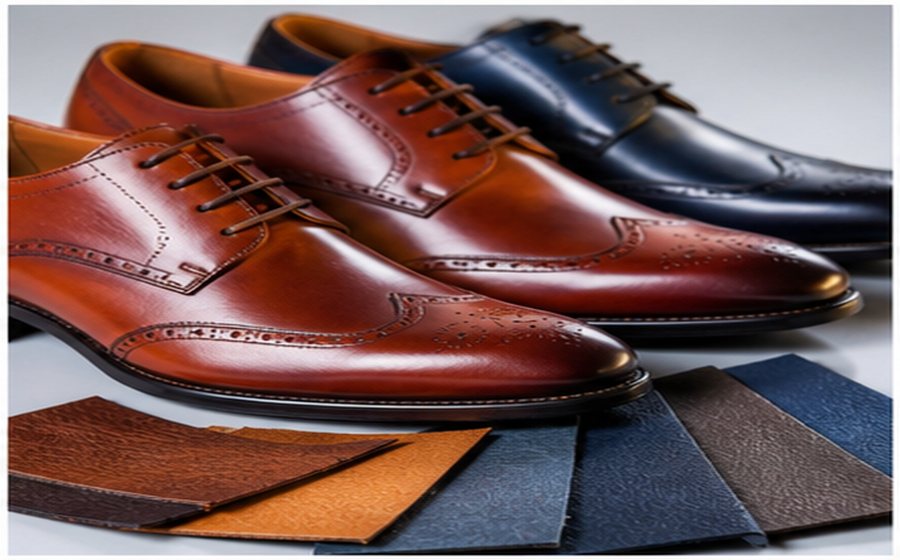
GLIDE™ leather dye range covers acid, direct, and metal-complex chemistries for varied leather types.
Technical Specifications by Dye Type
| Dye Type | Best For | Penetration | Lightfastness (ISO 105-B02) | Migration Fastness | Typical Application pH |
|---|---|---|---|---|---|
| Acid Dye | Full-grain aniline, wet-blue chrome-tanned | Deep (full cross-section) | 4–7 (Blue Wool Scale) | Good–Excellent | 3.5–5.0 |
| Direct Dye | Corrected-grain, pigmented finish, splits | Surface–Medium | 3–5 | Moderate | 5.5–7.0 |
| Metal-Complex (1:2) | Automotive, furniture, high-lightfastness | Medium–Deep | 6–8 | Excellent | 4.0–5.5 |
| Reactive Dye | Wet-white, aldehyde-tanned | Deep | 5–7 | Excellent (covalent bond) | 4.0–6.0 |
| Sulfur Dye | Heavy splits, work boot leather | Surface–Medium | 4–6 | Good | 9.0–10.5 |
Note: GLIDE™ acid dyes and metal-complex dyes are supplied as uniform fine powder with consistent particle size (typically D90 ≤ 50 μm), ensuring reproducible penetration across batches.
Dye Selection Matrix: Leather Type × Recommended Chemistry
| Leather Type | Recommended GLIDE™ Dye Type | Penetration Goal | Key Fastness Concern | Typical Drum Time |
|---|---|---|---|---|
| Full-Grain Aniline (furniture/auto) | Acid dye or 1:2 metal-complex | Full cross-section | Lightfastness + migration | 60–90 min |
| Full-Grain Semi-Aniline | Acid dye (base) + pigment finish | Deep | Crocking/rub fastness | 60–75 min |
| Corrected-Grain / Pigmented | Direct dye or acid + pigment coat | Surface | Adhesion of finish coat | 45–60 min |
| Suede (split, buffed flesh side) | Acid dye (full penetration) | Through-and-through | Dry-cleaning fastness | 60–90 min |
| Nubuck (buffed grain side) | Acid dye or metal-complex | Deep, uniform surface | Light + rub fastness | 60–90 min |
| Wet-White / Aldehyde-Tanned | Reactive dye | Deep | Wash fastness | 75–120 min |
| Vegetable-Tanned | Acid dye (low-affinity type) | Medium | Evenness / levelness | 45–75 min |
| Split Leather (coated) | Direct dye or sulfur dye | Surface–Medium | Finish adhesion | 30–60 min |
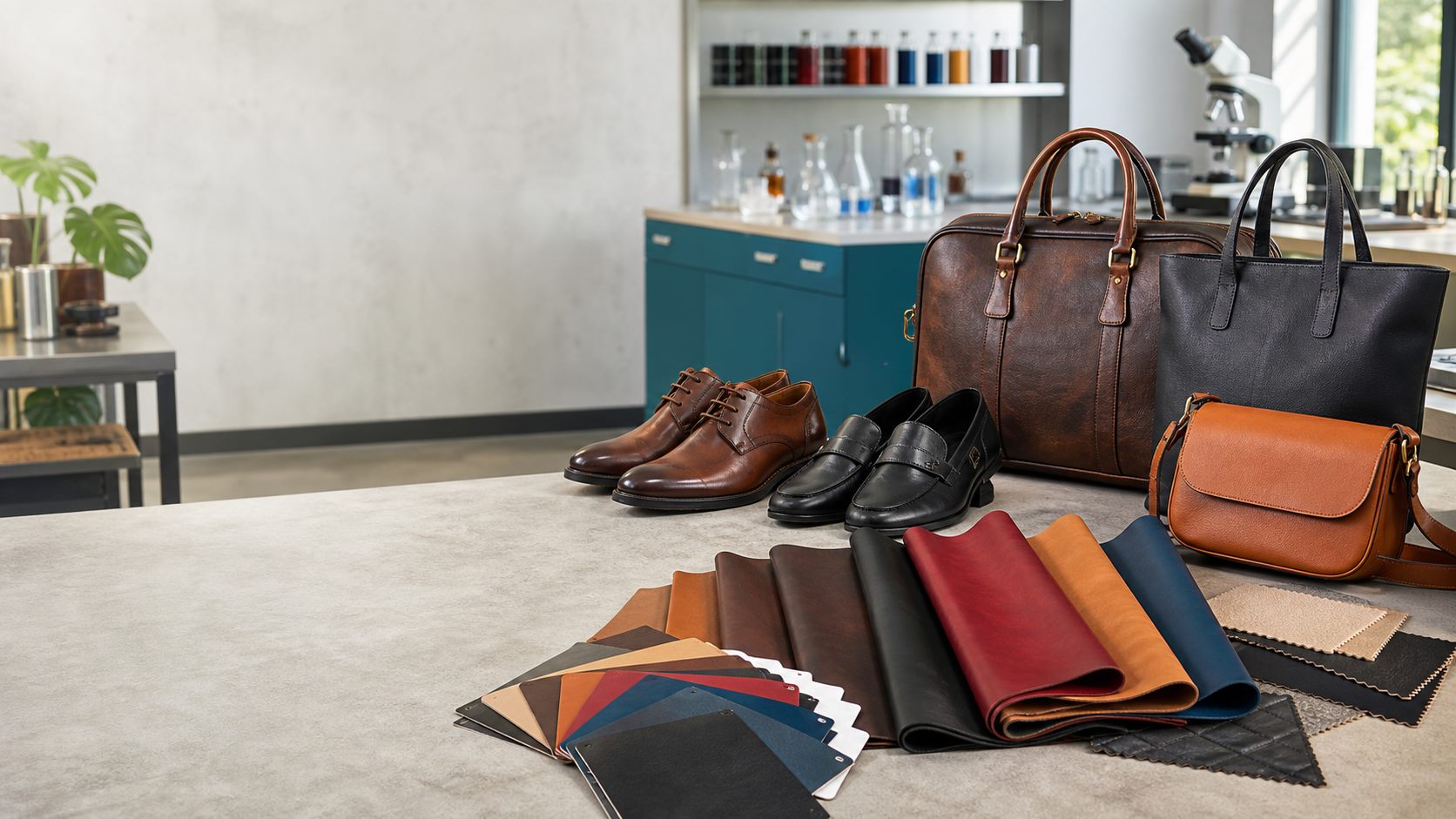
GLIDE™ dyes power coloration across upholstery, footwear, and leather accessories.
How to Choose the Right Leather Dye: A Step-by-Step Workflow for Buyers
- Identify the leather substrate first. Before you look at a single dye code, confirm with your production team: Is this full-grain or corrected-grain? Chrome-tanned or vegetable-tanned? Aniline finish or pigmented? This single piece of information eliminates 70% of wrong-dye scenarios.
- Define the end-use fastness requirements. Automotive leather (ISO 105-B02 ≥ 6) has radically different specs from fashion garments (ISO 105-B02 ≥ 4). Write down the target values for lightfastness, rub fastness (ISO 11640), and migration fastness (ISO 15701) before requesting a quote.
- Request the right dye chemistry from your supplier. With leather type and fastness specs in hand, ask your supplier to recommend a specific dye chemistry. For GLIDE™ dyes, this means asking: "I need a penetrating acid black for full-grain aniline, lightfastness ≥ 6, migration fastness ≥ 4." The supplier should respond with a specific product code, not a generic category.
- Run a drum trial on a 5 kg lab sample. Never approve a full container without testing on your actual substrate and your actual drum setup. GLIDE™ samples are available in 0.5–5 kg quantities for this purpose. Test penetration depth, shade match under D65 lighting, and all relevant fastness parameters.
- Lock the formulation and order in bulk with a certificate of analysis (COA). Once the trial passes, specify in your PO: "Must match approved lab sample [batch number] within ΔE ≤ 0.8 (CIELAB, D65/10°)." Request a COA with each shipment that lists actual batch values for strength, shade, insolubles, and pH.
Quality-Control Evidence: What GLIDE™ Dyes Test For
Every batch of GLIDE™ leather dye leaving the Dezhou Jinmao Chemical factory undergoes a standard QC panel before shipment. Buyers receive a batch-specific COA covering these parameters:
| Test Parameter | Method | Typical GLIDE™ Specification |
|---|---|---|
| Strength (relative to standard) | Spectrophotometry, visible range | 100% ± 3% |
| Shade match (ΔE) | CIELAB, D65/10° illuminant | ΔE ≤ 0.8 vs. approved standard |
| Insolubles | Filtration, gravimetric | ≤ 0.1% |
| Moisture content | Karl Fischer or oven drying | ≤ 5% |
| pH (1% aqueous solution) | pH meter | Product-specific (typically 4.0–8.0) |
| Lightfastness | ISO 105-B02 (Xenon arc) | Product-specific (typically ≥ 5 Blue Wool) |
| ZDHC conformance | ZDHC MRSL v3.1 | Level 3 (certified by third-party lab) |
The QC lab at Jinmao Chemical runs drum trials on standard wet-blue leather for every new production batch, cross-referencing against retained reference samples. Buyers can request photos of the lab drum trial along with their COA — this is standard practice, not a special request.
Packaging & Shipping: How Your Dye Order Arrives
GLIDE™ dyes ship in three standard packaging formats, selected based on order volume and destination port handling capabilities:
| Packaging | Net Weight | Pallet Load | Best For |
|---|---|---|---|
| PE-lined kraft paper bag | 25 kg | 40 bags / pallet (1,000 kg) | Standard bulk orders, FCL |
| HDPE drum with inner liner | 30 kg | 24 drums / pallet (720 kg) | Humidity-sensitive destinations, tropical ports |
| Custom big bag / FIBC | 500–1,000 kg | 1 per pallet | High-volume single-color orders |
All packaging carries bilingual (EN/CN) labels listing product code, batch number, net/gross weight, UN number (if applicable), and ZDHC conformance mark. Standard palletization uses heat-treated ISPM 15 compliant wooden pallets with stretch-wrap and corner protectors. Shipping documents include commercial invoice, packing list, COA, and certificate of origin (Form E for ASEAN, Form A for GSP destinations, or standard CO for others).
5 Common Mistakes Leather Dye Buyers Make — and How to Avoid Them
Leather Dye Procurement Checklist
Frequently Asked Questions
Which dye type gives the best lightfastness for automotive leather?
1:2 metal-complex dyes deliver the highest lightfastness (Blue Wool 6–8) and are the standard choice for automotive and contract furniture. GLIDE™ metal-complex blacks and browns are formulated specifically for ISO 105-B02 ≥ 6 targets.
Can I use the same acid dye for full-grain and corrected-grain leather?
Technically yes — but you'll be overpaying for penetration you don't need on corrected-grain. Direct dyes are more cost-effective for surface-level coloration on buffed or pigmented leathers. If your production line runs both types, it's common to use acid dye for full-grain orders and direct dye for corrected-grain work.
How does ZDHC Level 3 certification affect my dye purchase?
ZDHC Level 3 means the dye has been tested by an independent third-party laboratory and confirmed to contain no substances above ZDHC MRSL v3.1 limits. For buyers shipping finished leather to EU brands (especially automotive and fashion), Level 3 certification eliminates the need to re-test each incoming dye batch for restricted substances — the certificate does the compliance work upfront.
What is the minimum order quantity (MOQ) for GLIDE™ leather dyes?
Standard MOQ is 25 kg per product code for first-time trial orders. For ongoing procurement, container-load quantities (5–20 metric tons) unlock the best per-kilogram pricing. Contact the GLIDE™ sales team for exact MOQs by region.
How long does a typical dye shipment from China take?
Sea freight to major EU ports (Hamburg, Rotterdam, Barcelona) runs 28–35 days. To North American West Coast ports (Los Angeles, Vancouver), 15–20 days. East Coast via Panama adds 5–7 days. Air freight to most destinations is 3–7 days for urgent orders under 500 kg. Customs clearance time is not included in these estimates.
What documentation do I need to import dyes into the EU?
Standard documents: commercial invoice, packing list, bill of lading, certificate of origin, COA per batch, and ZDHC Level 3 certificate. For REACH compliance, GLIDE™ dyes are pre-registered; ask your sales contact for the specific REACH registration number for your product code. Some EU member states may additionally require a Safety Data Sheet (SDS) in the local language.
Do you offer color matching services for custom shades?
Yes. Send a physical leather swatch or a Pantone/CIELAB target, and the GLIDE™ R&D lab in Dezhou will formulate a match. Standard turnaround for a custom match sample (0.5–1 kg) is 7–10 working days. There is no formulation fee for orders above 500 kg.
Get the Right GLIDE™ Dye for Your Leather — First Time
Matching dye chemistry to leather type isn't complicated when you approach it systematically. Start with the substrate, define your fastness targets, run a trial, and lock the spec in the PO. The team at Dezhou Jinmao Chemical ships GLIDE™ dyes to tanneries in over 40 countries — and we'd rather spend 10 minutes helping you spec the right product code than ship you something that doesn't fit your drum.
Request a free 5 kg trial sample or a COA for your target product code:
📧 info@dyespro.com | 📞 +86 138 6922 6336 | 💬 WhatsApp: +44 7895 584241
Dezhou Jinmao Chemical Co., Ltd. — Manufacturer of GLIDE™ dyes
Factory: Dezhou, Shandong Province, China
📞 Factory: +86 138 6922 6336 | 💬 WhatsApp: +44 7895 584241 | 📧 Email: info@dyespro.com
Website: www.dyespro.com